Leaders of a group dedicated to healing America’s rural-urban divide say there is a pressing need for Democrats to engage more authentically with rural communities, focusing on shared values rather than divisive politics.

We recently revealed the crucial findings of a two-year study by the Rural Urban Bridge Initiative (RUBI) Community Works project.
RUBI aims to rebuild trust and foster collaboration among diverse community members, particularly in rural areas where political polarization has become increasingly pronounced.
The findings from our study highlight the pressing need for Democrats to engage more authentically with local communities, focusing on shared values rather than divisive politics.
The need for Community Works
RUBI’s Community Works mission is to build relationships and trust across political differences by working together to address local needs
Local Community Works chapters collaborate with civic, faith-based, school, and other community groups on projects to strengthen their rural and working-class communities. So far, we have entered into over 500 local collaborations on more than 400 events.
Activities have included road & river cleanups, home repair, food distribution, diaper drives, kids’ crafts activities, hurricane relief, IT and Tax Prep assistance, community Easter Egg Hunts, and a STEM Summer Camp.
The necessity for such initiatives arises from a fact of political life: trust must precede persuasion. Many individuals express a desire to connect with those who hold different political views, yet distrust remains a significant barrier.
Read more from the Rural Urban Bridge Initiative: Voices: A critical step towards winning back rural voters
For instance, during my (Anthony Flaccavento) congressional campaign in 2018, I frequently encountered sentiments like, “I like you, but I could never vote for a Democrat.”
This sentiment is not isolated; it reflects a broader issue of trust, particularly among rural voters who feel disconnected from the Democratic Party.
Research has shown that trust is foundational to effective communication and influence. Without it, attempts to persuade individuals about policies or candidates often fall flat.
In a polarized political landscape, where partisan identities can overshadow local realities, rebuilding trust is essential.
This is especially true in rural communities, where perceptions of Democrats have been shaped by decades of neglect and misunderstanding.
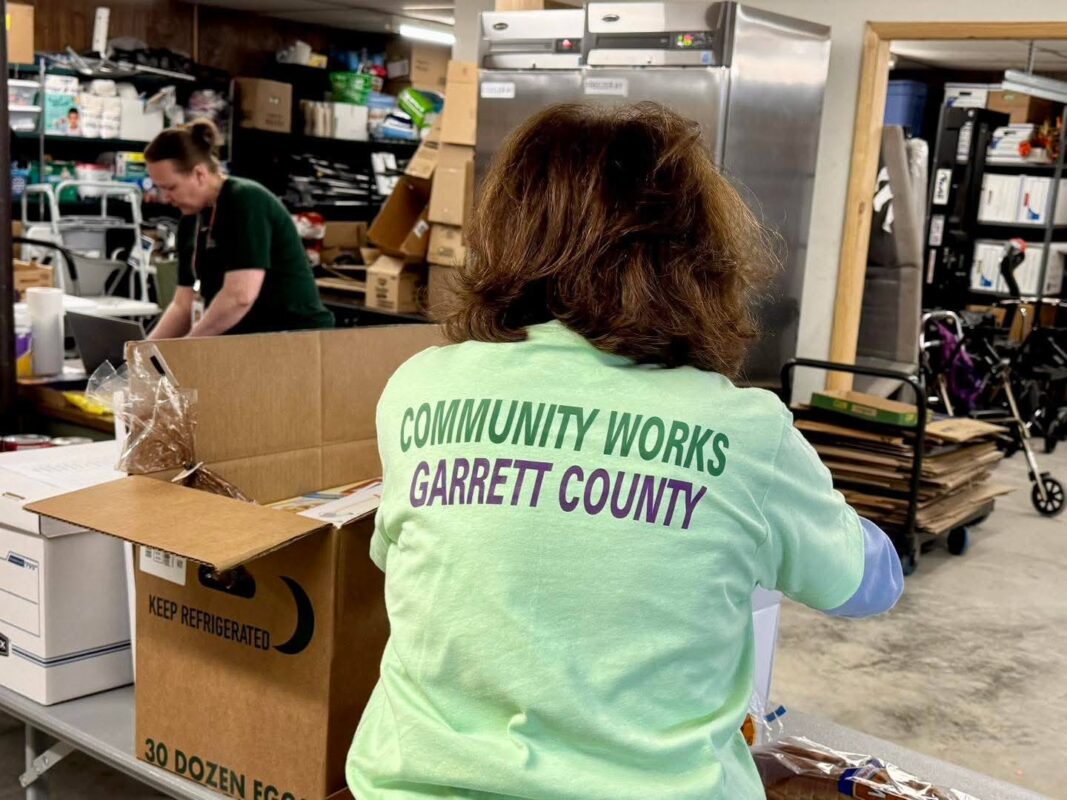
Volunteers at a Maryland food pantry (Image courtesy of Community Works)
The current political landscape
Recent surveys reveal that 90% of individuals feel exhausted by politics, while only 10% express hope.
This fatigue underscores the importance of how Democrats engage with rural communities. If our presence is predominantly perceived as opposition, it breeds further distrust. Many people are weary of political rhetoric and seek genuine connections based on shared interests and community needs.
Our findings indicate that while individuals prioritize issues like the economy and healthcare, they often perceive the Democratic Party as focused on topics like abortion rights and climate change.
This disconnect alienates potential supporters and emphasizes the need for a more grounded, local approach. It is crucial for Democrats to actively listen to rural voters and align our messaging with the issues that matter most to them.
Building trust through action
The Community Works initiative, launched in 2023-24 in Virginia and Georgia, emphasizes non-political community engagement.
By collaborating with local organizations and focusing on tangible needs—such as road cleanups, food distribution, and healthcare access—we aim to rebuild trust and demonstrate Democratic commitment to community welfare.
Our approach is rooted in the belief that effective political engagement begins with building relationships.
The first step in this process involves local volunteers committing to work side by side with neighbors on non-political efforts to address concrete community needs.
By partnering with civic, faith-based, and school groups, we strengthen our rural and working-class communities. This grassroots engagement allows us to present ourselves not as outsiders pushing a political agenda but as neighbors dedicated to improving the quality of life for everyone.
Success stories and growth
As we implement these projects, we’ve seen significant community involvement and leadership growth. Volunteers have transformed from being passive supporters to active participants in their communities. For instance, in our pilot counties, volunteers organized events that not only addressed local needs but also fostered connections across political divides.
One notable project involved working with the Red Cross to install smoke alarms in a small town in southwestern Virginia. The Community Works led effort brought together a wide range of volunteers from different backgrounds and political affiliations – Red Cross workers, Fire and Rescue Crew members, Food Lion employees, retired veterans, a local minister, and several Democratic Committee volunteers.
The success of these initiatives is evident in the increased enthusiasm within local Democratic committees. Many volunteers who initially hesitated to participate in political activities have found common ground through community service.
As a local committee chair (Meredith Dean), I was told over and over that people didn’t feel they had anything to offer the Democratic party if they weren’t willing to go door-to-door canvassing in our isolated areas.
They now understand that they can make a positive impact in many different ways without sacrificing their values. This shift in perspective is crucial for revitalizing local Democratic organizations and attracting new members.
Measuring impact
To assess the effectiveness of Community Works, we partnered with Dr. Nick Jacobs to develop a comprehensive survey. Our results indicate that participation in community projects significantly reduces partisan polarization and enhances local civic engagement. Residents report viewing local Democrats more favorably, recognizing their efforts to improve community well-being.
The survey revealed that residents in Community Works counties were statistically less likely to harbor hostility toward members of the opposing party. They began to rely more on their local experiences than on national partisan narratives when evaluating political figures. This change in perspective is a promising sign that our efforts are resonating with the communities we aim to serve.
A call to action
As we continue to expand Community Works, we invite individuals from across the country to join us. Our goal is to cultivate a grassroots movement that prioritizes local engagement and builds bridges across divides. By focusing on shared values and collective action, we can restore trust and pave the way for a more inclusive political landscape.
Building trust takes time and effort, but the results are worth it. We encourage community members to identify non-political, hands-on projects that address local needs. This approach not only benefits the community but also fosters a sense of belonging and cooperation among participants.
Where do we go from here?
In these challenging times, rebuilding trust is essential for the Democratic Party’s future.
Through initiatives like Community Works, we are not only addressing immediate community needs but also laying the groundwork for lasting political change.
The evidence is clear: when Democrats engage authentically with their communities, they can break down barriers of distrust and foster a more inclusive political environment.
By prioritizing local concerns and demonstrating a commitment to service, we can reshape perceptions of the Democratic Party and create a stronger, more unified community.
As we move forward, let us remember that our success lies in our ability to connect with our neighbors, listen to their concerns, and work together towards common goals.
Together, we can foster a culture of collaboration, understanding, and hope, ultimately creating a brighter future for all.