A new Postindustrial columnist stresses the importance of empowering farmers, entrepreneurs, and small businesses in rural America.

The farmers market in the little town of Abingdon, Virginia, population 8,200, is one of the best in the state. But it didn’t start out that way.
I was among a handful of folks selling produce there nearly three decades ago, back when the market took place in a barely-paved parking lot, largely obscured from the view of both motorists and pedestrians.
A half dozen or so farmers were selling out of the back of our trucks, offering 10-12 varieties of vegetables on Saturday mornings during the summer months.
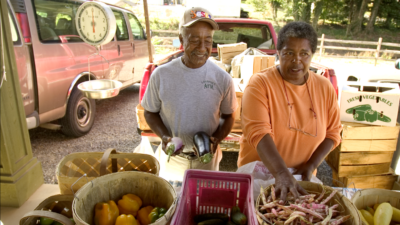
Today, the Abingdon Farmers Market has more than fifty vendors every Saturday morning, and a somewhat smaller number on Tuesday afternoons. Along with a far greater array of fruits and vegetables, there is milk, yogurt, eggs, meats of all kinds, baked goods, other prepared foods, and homemade crafts.
Everything is grown, raised, or made locally. On Saturday mornings, nearly two thousand people visit the market, many doing the bulk of their grocery shopping for the week.
Open year-round, though with more limited hours December through March, the market takes place in a pavilion built in 2007. Funded by both local and state dollars, the Market Pavilion is used for other community events during off-hours.
What made the difference?
What transformed the Abingdon Farmers Market from six old fellas hawking a few vegetables into a major attraction, shopping venue, and incubator for small businesses was this: a commitment of time and money to build something better from what we already had, starting with the farmers themselves.
The farmers producing for the Abingdon market not only grew in number but also in the quantity, quality, and diversity of the products they offered.
Diversifying and increasing the amount of what you produce entails significant risk, as you don’t know whether or not it will sell.
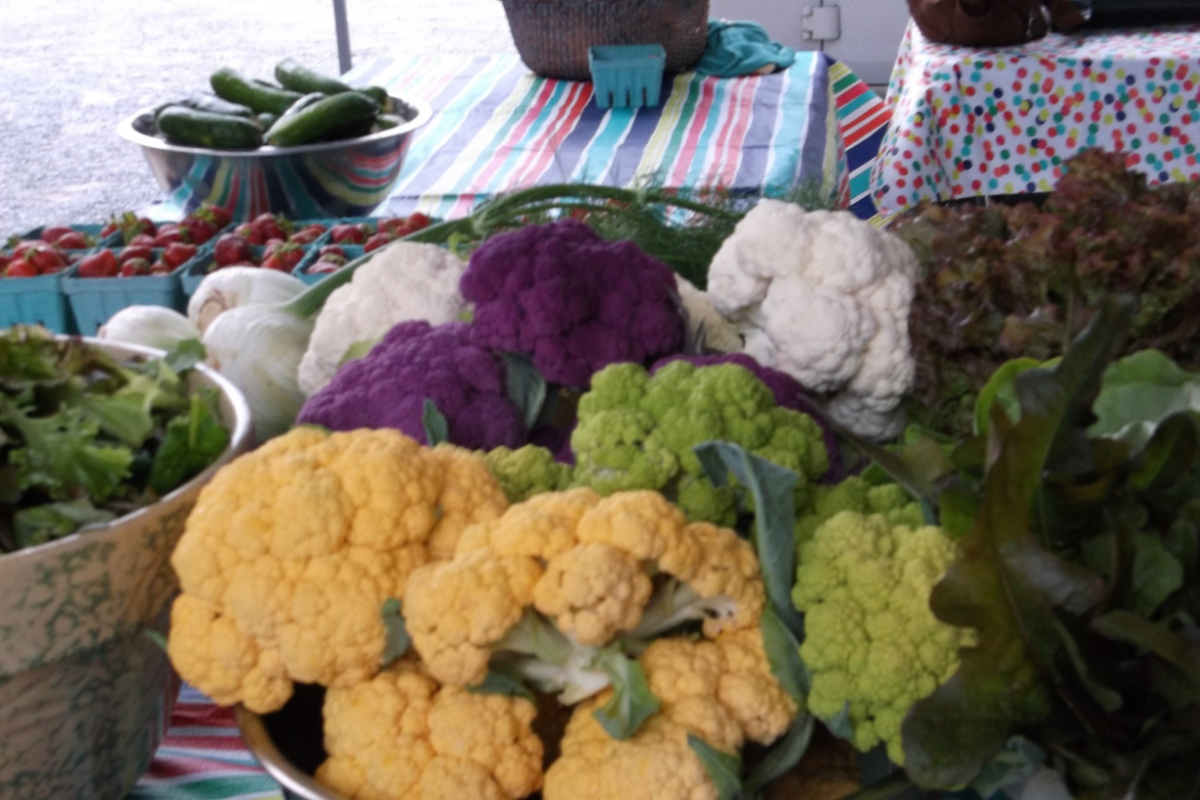
Will Abingdon folks buy this purple cauliflower?
Or cherry tomatoes that are green, gold, and striped?
How big is the demand for Italian green beans, and is the price you can get for them worth the time it takes to pick them?
For farmers raising beef, pork, or lamb, they must plan a year or more out to have meat at the right time, along with key decisions about which cuts (steak, ground, etc.) will most likely sell. While the time frame is a bit shorter, those raising poultry for eggs or meat have similar calculations to make.
Farmers are the foundation of a strong market. However, they are also the ones shouldering most of the risk.
To reduce that risk and improve their chances of viability, a strong local market also entails expanding the range of probable buyers – restaurants, small grocers, college dining halls, etc – and building a market facility big enough for steady growth and inviting enough for thousands of people to want to shop there.
In Abingdon’s case, much of the market expansion was carried out by the farmers themselves in concert with a strong local non-profit, Appalachian Sustainable Development (ASD). [Full disclosure: I was the director of ASD during the first 10 years of the market’s development].
It was these two entities, the farmers and ASD, that built relationships with the town and the county, leading to a quarter-million-dollar investment in the market facility eight years into the market’s growth.
Part of that investment came from the Virginia Tobacco Commission, using funds obtained through the 1998 lawsuit and settlement with the major tobacco companies. The state played a modest but important role as well, helping with marketing and navigating the rules for food preparation, processing, and display.
ASD and market leaders also created the infrastructure needed for vendors to accept EBT (formerly called food stamps), the state’s “Senior Coupons” program for purchasing produce, and a “double-bucks” program that enabled food stamp users to double their purchasing power when they shop at the market.
From a policy and political point of view, what lessons can we glean from the Abingdon Farmers Market experience and hundreds of similar bottom-up development efforts across rural America?
Here’s what we learned
First, it is essential that local people, particularly farmers, entrepreneurs, and small businesses, be in the driver’s seat as much as possible. The farmer and vendor-led approach used in Abingdon helped win support from elected officials and a small range of donors. It also ensured that policies and rules governing the market avoided unnecessary bureaucracy and facilitated strong growth.
Second, while cooperation from local governments is critical for many bottom-up economic efforts, state and federal governments also play a critical role.
One example of this took place in 2008 when the USDA expanded the food stamp program to allow farmers’ markets to accept food stamps (EBT) and WIC.
This common-sense rule change has helped both farmers and lower-income consumers, with an estimated $70 million in EBT spending in 2023, a more than 400% increase over ten years. It happened because farmers and public health advocates pushed for it for many years.
Lastly, for folks on the Left, there’s another critical lesson to be learned: Progressive food, farming, and economic development initiatives have been unfolding in small towns and rural areas for more than three decades now, rebuilding prosperity, addressing some of the most pressing problems these communities face, from health care to housing to economic revitalization.
They’ve just not been getting the investment they need and deserve. And they often run into rules and regulations written for the biggest corporations, not small businesses and family farmers.
My organization, the Rural Urban Bridge Initiative, has been highlighting many of these examples from across the country, which we call “Rural Success Stories.” In the process, we connect them to the kinds of public policies that undermine these efforts and those that support them, like the Rural New Deal.
Along the way, we’ve discovered that many on the Left, especially in cities and suburbs, are almost completely unaware of these innovative efforts at local self-help, almost always undertaken as non-partisan initiatives.
Nor do most know the kinds of policies that will help level the playing field for these bottom-up engines of prosperity. This lack of attention to the extraordinary efforts of rural leaders and the substantial impacts they’re having helps perpetuate a media narrative of total rural dysfunction and despair.
Leaders on the Left and in the Democratic Party could begin to shift this narrative by putting forward plans and policies for the regeneration of rural and working-class communities, based upon the hard-fought experience of hundreds of rural success stories.