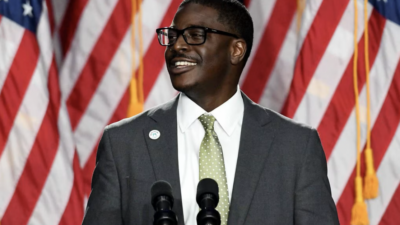
In Wisconsin, a political storm brews as David Crowley, the Democratic nominee for governor, champions an ambitious plan to legalize marijuana.

As the state grapples with fiscal challenges, Crowley said he thinks legalizing cannabis could catalyze a transformative economic strategy—one that promises to fund free pre-kindergarten education and expand healthcare access.
Standing at a podium in downtown Milwaukee last week, Crowley laid out his vision for Wisconsin’s future.
“We want to make sure, one, that we legalize marijuana,” he emphasized, as curious onlookers gathered. “That will help bring in more dollars throughout the state.”
His words resonated with many who have felt the strain of rising costs and dwindling resources.
Crowley, who has served as Milwaukee County executive, pointed to the success of neighboring states like Illinois and Michigan, where cannabis legalization has generated substantial tax revenue, created jobs, and invigorated local economies.
“We don’t have the same opportunities as folks in Minnesota, Michigan, and Illinois,” he remarked. “It’s time for Wisconsin to step up and seize this opportunity.”
However, Crowley’s proposal extends beyond just cannabis.
He called for an end to tax breaks for billionaires, urging a reevaluation of how the state allocates its resources.
“It’s about looking at the totality of our revenue and spending,” he stated, insisting that both big corporations and new industries like cannabis must contribute fairly to the state’s economy.
His opponent, Republican U.S. Rep. Tom Tiffany, took a more cautious stance, advocating for a “go-slow approach” to marijuana legalization.
“We’ve seen some states that went straight to it, like Colorado, and they had some real problems,” he warned, citing potential pitfalls in other states.
Tiffany’s campaign supports legalizing medical marijuana but insists on strict regulations to protect children and ensure responsible use.