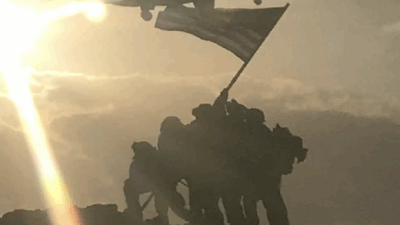
On this, the 250th anniversary of the US Marine Corps, a Postindustrial columnist and Marine veteran reflects on the values he learned while serving his country and the challenges Marines face today, both abroad and at home.

“Close your eyes. Envision victory. Now go win.”
Those were the words I shared with the girls’ soccer team I coach before heading into penalty kicks in the second round of the playoffs.
It’s the same mantra I repeated to myself hundreds of times during my time in the Marines.
Watching the girls emerge victorious lifted me out of a troubled world for a fleeting second – witnessing Marines execute missions under impossible circumstances evokes the same emotions.
Sometimes I still wish that there was a world where I could balance having both – leading my family, finding stability in community, and leading Marines.
Because Marines are selfless people who routinely perform selfish acts – whether that includes waking up at four in the morning and leaving your family to prepare for a field exercise, or taking the lives of our enemies to preserve the American way of life.
Often, we knowingly perform those selfless and selfish acts for a fractured country, with the hope that tomorrow will bring a better day and the hope that our country will take care of us after we return.
For the past 250 years, Marines have voluntarily left their homes to prepare for wars in foreign lands and defend the Constitution against all enemies – foreign and domestic.
In 2009, at the age of 20, I entered Officer Candidate School, believing I was an expert in foreign affairs. I was under no illusions about the wars in Iraq and Afghanistan.
As a child of a naval officer, I had read Cold War assessments of Russian forces. I chose the Marines to ensure that my beliefs would be tested under fire.
Sometime during my preparation for my second deployment, I read a book titled “In the Gray Area: A Marine Advisor Team at War,” authored by then-Lt. Col. Seth Folsom.
By the winter of 2017, I found myself in western Iraq supporting Task Force Lion, a NATO unit operating out of Al Asad Air Base in western Iraq, tasked with destroying the Islamic State in the Middle Euphrates River Valley, led by now-Col. Seth Folsom.
I vividly remember my first time closing the door of my armored vehicle and going “condition 1” (aka chambering a live round in a weapons system) after giving what I hoped wouldn’t be my last patrol brief. Inexplicably, I found time to write about that experience from a subsequent trip on patrol on Nov. 6, 2017.
“The final date I have to decide to stay in the Marines is November 11. By the time you see this, I will have already clicked/said no…Killing people doesn’t motivate me too much; very little critical thinking is required. I was going to call people for advice, input, etc… but I don’t think I need it. You have sacrificed enough and don’t have the desire to move everybody around with school and stuff… Hopefully, I will have internet/phone by the time you receive this. Tell Skyler to be more like Mom and not as dumb as me, and score points. Just be a little less dumb than me and score points…”
My writings could have described the complexity of being a Black Marine serving under a president whose foreign policies seemed rooted in racism and xenophobia at the time.
They could have also described the complexities of working with the Army, French Artillery, and British soldiers to fight alongside Shia militia groups with questionable allegiances to fight the Syrian Defense Forces, Russian mercenaries, and Islamic State.
However, my sole motivation for returning home was meeting my then 2-week old daughter who was born days after I deployed and rebuilding a life that would result in me watching her kick the game winning penalty kick on a fall afternoon eight years later.
These dreams would be the thoughts that dominated my mind, and our conversations, sitting around a rock with dirty Marines and soldiers of differing nationalities in the desert, eating field rations under dark skies with the thunder of American rockets and French artillery in the background.
For the past 250 Marines have shared meals, away from home, fighting in foreign lands, talking about family, fantasy football, and doing whatever it takes to come home safely.
My work and writings, like mine, serve to assist the Marines of today in navigating the constant dilemma of love for each other and their country, while acknowledging the cost of missed births, goals, and connection with their community at home, to make the transition a bit less complicated.
This work is more important now than ever. We must protect those who protect our way of life. We must invest in assimilating our Marines back into the community after they leave the service.
At this moment, someone just like me is writing a similar letter to a daughter they hope to meet while fighting a manufactured “invasion.”
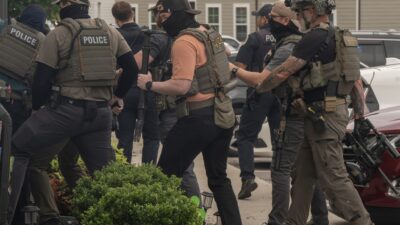
On May 6, 2025, two Marines lost their lives supporting an immigration enforcement mission along the US-Mexican border rooted in false narratives.
Today, Marines are reporting for duty in foreign lands while their families lose access to healthcare, food, accessible housing, and the very land they served to protect.
The battlespace for veterans today isn’t a foreign land – it’s at the dinner table and in our own communities.
I believe the will to fight is the single most important factor in war – the will to fight represents the indelible human nature of warfare. Over the past year, I’ve had the privilege of being lifted up by Marines such as:
- Janessa Goldbeck, executive director of Vet Voice Foundation, who empowers military Veterans to become civic leaders and policy advocates by providing the support, training, and tools they need
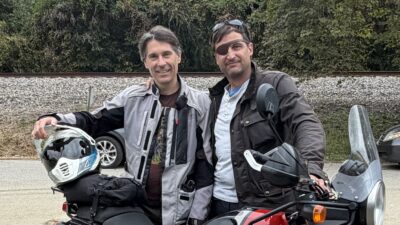
- Jimi Shaughnessy, Veterans program manager at the National Parks Conservation Association. Shaughnessy empowers veterans to become fearless and outspoken defenders of America’s national parks, improving programs to accommodate service and recreation opportunities for veterans and their friends in local and national parks.
- Elizabeth Stephens, the first Black woman Marine MV-22 Osprey pilot, now uses her voice to combat the erasure of the legacies of Marines under the current administration and helps veterans channel controlled rage to build resilient communities.
- Kevin Rumley, program director of the Buncombe County, North Carolina, Veterans Treatment Court, a non-adversarial, treatment-based diversion program for justice-involved veterans.
I do not doubt that the Marine Corps will continue to produce Marines like these and win America’s battles when called upon.
And my experience as a Marine veteran assures me that Marines who protect our people, land, and way of life have the will to defeat the domestic threats we face as well.
Postindustrial is proud to partner with the Sierra Club to provide perspectives on stories that affect the outdoors and those who enjoy them in our community.