Even small beautification projects aimed at enhancing Postindustrial Communities can have a major impact. Just ask the folks in this small Ohio village.

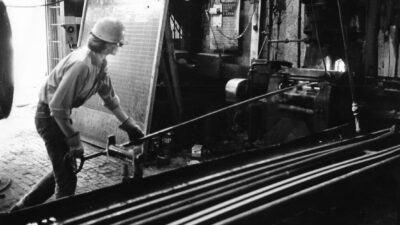
Following several decades of steelmaking, the town of McDonald is preparing to pay tribute to its industrial past by reimagining a swath of the area for all to enjoy.
Ohio History Connection, a statewide history organization that celebrates the state’s origin stories, provided a grant to create a new quarter-mile-long trail through the community’s Woodland Park.
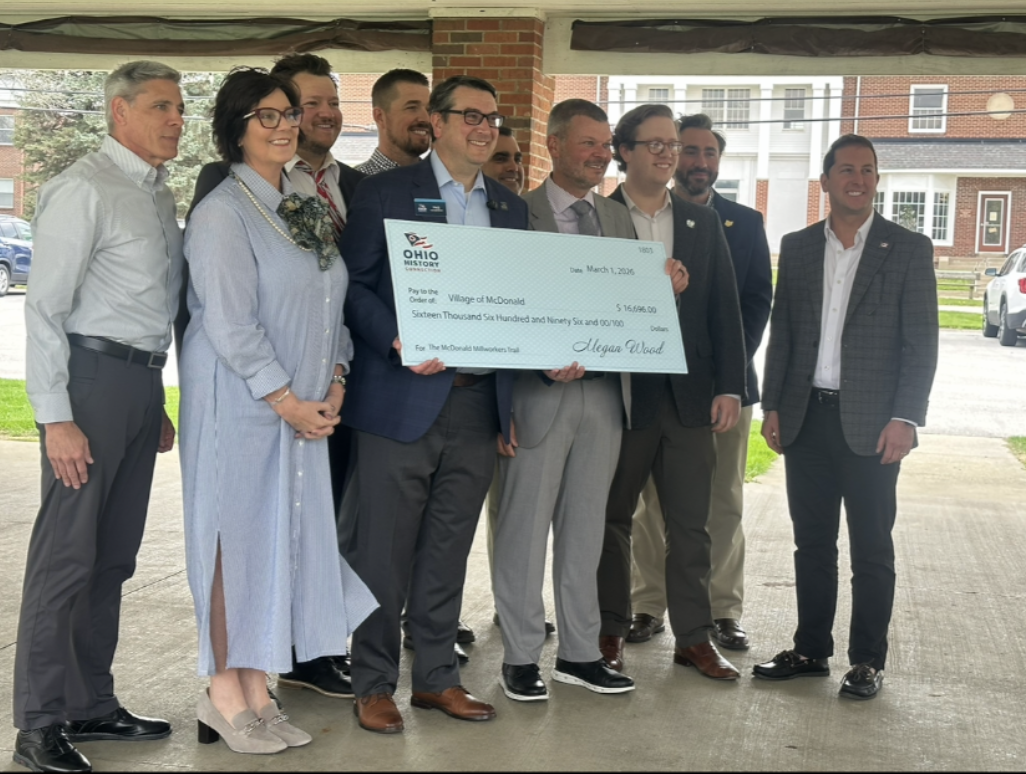
Local elected officials and McDonald citizens celebrate funding for a new trail that will commemorate the community’s industrial past. (Image courtesy of Matthew Ellis)
The trail will showcase McDonald’s vibrant history, which began in 1918 with the establishment of Carnegie Steel Company’s McDonald Works, later part of US Steel.
“McDonald has always been integral to the fabric of the Mahoning Valley, yet our community’s unique story often gets overlooked,” said Councilwoman Kerry Reckard, who is also the chair of the McDonald Parks Committee.
This project allows the Village to protect the stories and memories of families that have lived in McDonald for decades, while providing space for us collectively to reimagine what McDonald can be in our next chapter.”
Slated for completion over the next year, the project brings together the Village of McDonald, McDonald Local School District, and the Trumbull County Historical Society in a collaborative effort to preserve and celebrate the community’s storied history.
Like many Postindustrial Communities, McDonald has experienced its share of challenges since the collapse of the American steel industry and now seeks to reimagine its former industrial sites for a new generation to enjoy.
During the industrial boom in Northeast Ohio’s Mahoning Valley, once one of the nation’s largest steel producers, McDonald became a bustling community shaped by the labor and lives of immigrants from Southern and Eastern Europe.
This industrial expansion was central to the region’s social and economic fabric, with the Youngstown Works employing over 10,000 workers at its peak.
However, the demise of the steel industry in the late 1970s marked a challenging era for McDonald and the wider Mahoning Valley.
The 1977 closure of Youngstown Sheet & Tube’s Campbell Works was a pivotal moment, precipitating a steep economic decline and the loss of over 25,000 jobs across the region by 1982.
Yet, McDonald’s spirit endured. Local workers and venture capitalist David Tod revived operations under the McDonald Steel Corporation, preserving industrial activity until December 2023, when the site was finally cleared, ending over a century of industrial presence.
The McDonald Millworkers Trail, developed in partnership with KO Consulting, a community and economic development firm, is designed to honor this legacy, providing a public space to reflect on the Village’s industrial and cultural history.
The trail will guide visitors through pivotal historical moments, including the Village’s founding, women’s roles during World War II, the impact of deindustrialization, and the enduring legacy of McDonald Steel Corporation. Its final stop will invite contemplation on McDonald’s future.
Additionally, a memorial sign in town will honor family members who worked at the mill, featuring photographs and years of service.
“The creation of a public-facing memorial honoring McDonald’s community and industrial legacy is essential to our ability to remember the past, said Mayor Ray Lewis. “And also imagine what the next 100 years of McDonald’s future could look like.”