Pennsylvania appears to be (knock on wood) on a cautious path toward potentially legalizing recreational marijuana, as a state Senate committee has recently advanced a bill aimed at establishing a Cannabis Control Board.

This board would provide enhanced oversight of the existing medical marijuana program and regulate hemp-derived products, which currently contain intoxicating cannabinoids and are sold in various retail locations across the state.
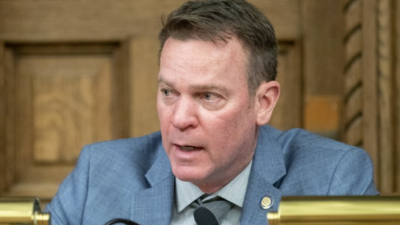
Sponsored by Republican State Sen. Dan Laughlin from Erie, this bill is not a direct move to legalize adult-use cannabis but is viewed as a significant step toward that goal.
The bill enjoys support from various cannabis industry groups and has garnered co-sponsors who were previously hesitant about recreational legalization.
However, it has also faced opposition from advocates of a broader legalization approach.
What the Cannabis Control Board will do
The proposed Senate Bill 49 seeks to shift regulatory authority over the medical marijuana program from the Pennsylvania Department of Health to the newly formed Cannabis Control Board.
The board will also oversee hemp-derived products, including Delta-8 THC, which have proliferated since the 2018 federal Farm Bill redefined hemp, allowing for the sale of products containing intoxicating cannabinoids with little to no regulatory oversight.
Growing concerns over hemp-derived products
The rise of hemp-derived products is a significant concern for health officials.
The U.S. Food and Drug Administration has warned that the market’s growth has led to increased calls to poison control centers and reports of adverse events, as many of these products may be mislabeled or contain harmful chemicals.
The effort to establish a Cannabis Control Board has received praise from cannabis advocacy groups like Responsible PA, which represents dispensaries operating under Pennsylvania’s medical program.
The path to legalization
The Republican-controlled Senate has historically posed the most significant barrier to legalizing recreational cannabis, despite Democratic Gov. Josh Shapiro’s continued advocacy for legalization in his annual budget proposals.
Democrats in the House have also supported legalization, having passed a bill last year that ultimately stalled in the Senate.
And now it seems that more Republicans are becoming open to the idea of legalizing recreational cannabis, especially after federal moves to reclassify cannabis from a Schedule I to Schedule III substance.
Mixed reactions and future prospects
Despite the bill’s advancement, it faced opposition from all Democrats on the Senate Law & Justice Committee, reflecting a divide on the best path forward.
Critics argue that Senate Bill 49 does not move the state closer to full legalization and instead serves as a distraction from more comprehensive cannabis reform.
Those advocating for recreational marijuana sales in the Keystone State note the financial advantages and the monetary losses Pennsylvania is already suffering.
Every neighboring state, except for West Virginia, has already legalized recreational marijuana, costing Pennsylvania hundreds of millions in tax revenue.
The Independent Fiscal Office estimates that regulated recreational marijuana could generate approximately $140 million in the 2026-2027 fiscal year, growing to over $430 million annually by 2031.