West Virginia faces a simple question: Should voting adapt to people’s lives, or should people struggle to adapt to voting?

Let’s be clear: West Virginia’s system is not broken — it works well. I’ve been a poll worker and been impressed and relieved by our system’s security. Elections are run professionally and securely. But working well doesn’t mean we can’t do better.
There’s much we can do to make voting both secure and accessible (those aren’t mutually exclusive, by the way). And we should.
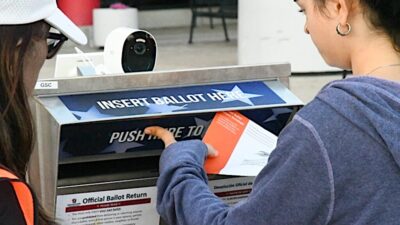
One answer is universal mail-in ballots. Eight states already do that, three of which automatically send every voter a ballot. It makes elections more secure, not less — ballot tracking, secure drop boxes, and other safeguards are built in. These measures create transparency and accountability. Let’s try it.
Adopting this system would ease the burden on election workers. It also reduces congestion at polling places, and gives voters flexibility.
Currently, voters must request absentee ballots if eligible. That extra step prevents participation. First, many don’t know if they are eligible. Some reasons include age (over 65), health, travel, being away at college or serving in the military.
But even if someone is eligible, there are hurdles. We can simplify things and still make them secure. There’s no reason not to. Universal mail-in voting removes that friction.
Let’s face it: it’s hard for older people to vote. Nearly one in four West Virginians is over 65. Many are active, independent and sharp. I know a woman who mows her grass at 97, climbs onto her roof and still drives. But for most, mobility is a struggle. Voting usually requires planning and often asking for transportation help. Let’s add that West Virginia has the highest percentage of people with disabilities in the nation, some of which involves mobility.
Work constraints add another logistical nightmare. People working multiple jobs shouldn’t face extra barriers. Plus, West Virginia is a childcare desert. Over 26,000 children lack access to childcare. That means parents are constantly coordinating care just to function day to day, let alone vote.
We do have early voting. Kudos to that; it helps working voters tremendously. There is at least one location in every county, usually at the courthouse. And the Mountain State has numerous polling places in some of our smallest towns. But the truth remains: A mailbox is always more accessible than a polling place — especially in the many hollows across the state, from Braxton County to Calhoun, Logan to Pocahontas.
Early voting runs from April 29 to May 9. That’s better than some states — Kentucky, for example, has only five days of early voting. But other states have far more. Fifteen states with small populations like ours offer more than 25 days of early voting, including Wyoming (28 days), Maine (30), Vermont (44) and South Dakota (46).
Let’s just say it plainly: our system is confusing. Afterall, it’s hard to even know when the primary election is. It’s always in May, always in even-numbered years, and always on a Tuesday. That’s basically as much as we know. Anything we can do to unpack the confusion would be helpful. We could hold elections on a weekend, like many other nations do. That would reduce work conflicts significantly.
But let me repeat: I support our system. West Virginia elections are run securely and carefully. The system is solid. Voting fraud is a myth.
Poll workers are also exceptional — but aging. Election Day is a long one: up at 4:30 a.m., there to set up the polling machines by 5:30, and often not home until after 8 p.m. I’m often the youngest person there by decades. And it’s getting harder to recruit people who can take time off work to serve. That’s another reason why ideas like universal mail-in ballots deserve serious consideration.
The point is: elections in West Virginia are run well. But we can always do more. Why not try?
It is time for West Virginia to bring the ballot box to the people.