Four years of full-scale war have taught us to let go of illusions — above all, the illusion of peace, writes a Ukrainian journalist-turned soldier.

The only thing worse than a war with Russia is peace with Russia.
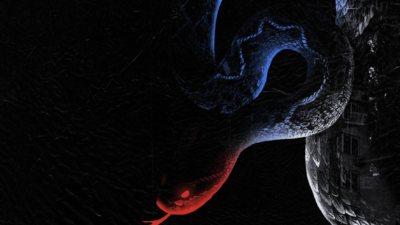
If a venomous snake falls asleep, because it is exhausted or because some wizard with a flute has lulled it, this means only one thing: time will pass, and it will awaken hungry, zealously searching for its next victim — and rest assured, it will have enough venom for the hunt. Perhaps you’ll manage to outrun it or inject yourself with some imported antidote just in time to avoid becoming prey to this creeping, persistent killer.
But as long as the snake is alive, it will retain its venom, its flexibility and its urge to strike. It has its natural habitat, and it will not leave it of its own accord. There can be no true peace unless the snake is killed or its fangs are torn out. This may sound barbaric in our humane, tolerant, technological age, yet it is unlikely there is any other way.
History has given us too many chances to break free from this deadly grip of our “older brother,” and it may well be that this chance is not merely our latest one, but our last. If we lose now, rest assured: our enemies will learn from their mistakes, and a new wave of Russification will sweep over us, eroding our identity until there’s nothing left.
To those who say, “Well, we’ve lived under Russia before and managed to survive,” I have bad news. Our ancestors were largely illiterate peasants — no one came after their folklore or traditions as long as they obediently fulfilled their serf duties or toiled in the quasi-slavery of the kolkhoz.
But the moment someone tried to climb even a single step higher on the social ladder, Russification became unavoidable. It didn’t matter if they did so with fingers crossed behind their back — they had to comply. In today’s world of social media and advanced information technologies, totalitarian education and propaganda are capable of achieving what the authors of the Valuev Circular and the Ems Decree once failed to accomplish.
Where does my pessimism come from? From a clear example right next door — Belarus, a country that chose the path of peaceful coexistence and alliance with Russia.
Let me offer a simple illustration: I type the Belarusian name of the country’s capital, Minsk, into Google, and the search engine presents me with two Wikipedia options — one in Ukrainian and one in Russian. Belarusian? No, never heard of it.
It would seem only natural to long for peace after four years of full-scale war. We are an exhausted country that has suffered immense losses. We survive on the breathing apparatus and dialysis of international aid. And all the while, enemy propaganda continues with its nagging refrain: “Do you really want to fight until the last Ukrainian?”
Yet we must face the truth: whatever the outcome of these complex and protracted negotiations, the most we can realistically expect is what military terminology calls an operational pause — a planned break in an offensive, meant for regrouping forces. We should not hope for more than that until the snake has lost its fangs and is no longer capable of producing venom.
Life in wartime is hard, and quite often unbearable. It can seem that even a bad peace would be better than this: let us have it, and we will sort out the rest later. But we would be sorting it out while fighting among ourselves, because the cessation of hostilities means elections — and with them, the all-too-familiar Ukrainian habit of bickering and searching for enemies amongst ourselves.
In my view, the best thing we could do during an operational pause is to strengthen ourselves to such an extent that the confrontation shifts into a cold-war phase, where a return to open hostilities becomes too costly and too risky for the enemy. I’m not optimistic enough to hope for more than that — not while the snake is still alive.
I deliberately compare Russia to a snake rather than the traditional bear. A snake embodies ancient evil, satanic hubris, archaic imperialism — a pagan death cult. It can hypnotize the world with its “great culture,” which is laced with poison for naive idealists enchanted by the myth of the “mysterious Russian soul.”
The snake is not just our enemy; it tempts and bites many others, and we can see how Russian poison seeps into every fissure of discord in the Western world — migration, gender issues, social inequality, the vulnerabilities of political elites, and the fragility of democracy. Looking at a map of Europe, you will see snake pits everywhere, from the far-right and far-left fringe groups to the ruling parties in Hungary and Slovakia.
We have been defending ourselves against a far stronger enemy for more than a decade now. Isn’t that a miracle?
Meanwhile, the average mind still brings up the same old question: “When will this all end?” Not how — when. And that is where the greatest trap lies. Under Russia’s terms, it could all end tomorrow. Electricity would be quickly restored, bad jobs and meager wages offered — just like in the occupied territories. Because, as they say, “you can live like cattle, as long as there’s bread to eat.” Not everyone would be killed or raped, and those who had failed to thrive in an independent Ukraine would take the place of the murdered patriots. There would be concerts on May 9, tours by Russian pop stars, a new season of Liquidation filmed in Odesa, and sitcoms about the adventures of Moscow bachelors filmed in Kyiv, while high-ranking officers express delight at Ukrainian borshch and varenyky served in our restaurants. Much would remain, yet the one thing utterly lost would be our dignity.
Yes, it is dignity — not the size of salaries and pensions, nor the availability of electricity in our apartments — that makes us human. We haven’t forgotten the name of the 2014 revolution, have we? The Revolution of Dignity. To betray it would mean betraying the Heavenly Hundred.
February 24 is not a date to celebrate. Who celebrates the start of a full-scale war? Only madmen. Yet it will remain in our memory as the day we grew up as a nation. We shed all illusions and discarded what once seemed important, taking full responsibility for our country. Because we are citizens of a republic — and what is res publica? A common cause, if you look at its Latin roots.
Not everyone has grown up, and not everyone has taken responsibility — unfortunately. But as long as “there is still an adult in the house,” we have a chance to defeat the snake and defend our dignity — even if it seems like a miracle or a proof of God’s existence.
This interview was made possible thanks to the support of The Ukrainians Media community — hundreds of people who believe in independent, high-quality journalism. Consider joining to help our Ukrainian colleagues create meaningful content.