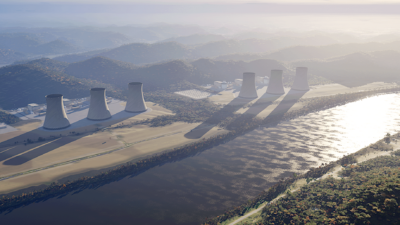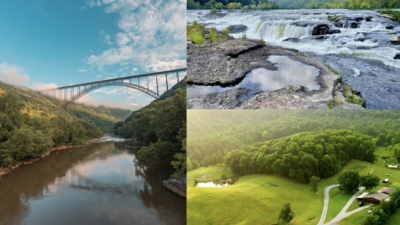
The dream of a State of Appalachia has a long history.
[The following is an excerpt from James Branscome’s Substack, a must-read for anyone interested in Appalachia. Also, check out his new book Annihilating the Hillbilly Redux: Appalachia’s Struggle Against America’s Institutions.]

Every generation or so, somebody takes a ruler to a map of Appalachia.
They start in the high country of eastern Kentucky, thirty counties of it, and carry the line east into West Virginia — sixteen counties, the only state in the Union that lies wholly inside the mountains. Then they swing down through the seven coal counties of southwest Virginia and the seven of upper East Tennessee and draw a border around the part of America that has produced the most wealth and kept the least of it.
Sixty counties. Call it the State of Appalachia. Give it a capital like Welch, West Virginia, or Pikeville, Kentucky.
Give it a severance tax that stays home, two senators who answer to the hollers instead of to Frankfort and Charleston and Richmond and Nashville, and a flag with a tipple on it.
On paper, it is an intriguing idea that is more than a century old.
Support your local bookstore by ordering Jame’s Branscome’s new book here.
The border was never fixed, mind you. Some who dreamed it drew only the coal counties. Others wanted the whole mountain spine — from north Georgia to the Pennsylvania line, the entire Southern Highlands — on the theory that the mountains were one state; however, the surveyors had sliced them.
The map varied.
The longing under it did not.
And the longing is no antique. It was revived, in our own time, on its own ground.
In the late 1960s and into the 1970s, the mountains gave rise to a movement that thought hard about who owned the region and who ought to.
The Council of the Southern Mountains — the old Berea missionary body that had spent half a century being earnest and careful — was taken in hand by a younger, mostly mountain-born, progressive generation of organizers who gave it teeth.
At Fontana in 1969 and Lake Junaluska in 1970, they voted to seat poor people on their own board, to oppose strip mining outright, and to quit being a polite auxiliary to other people’s anti-poverty programs.
The Council’s magazine, Mountain Life and Work, became a strong advocate for change. In Huntington, West Virginia, the Appalachian Movement Press ran off pamphlets that spoke without flinching of liberating “the Appalachian colony.”
The sociologist Helen Lewis and two other editors gave the argument its spine: the region was not backward, it was colonized — a rich land kept poor because keeping it poor paid people who lived somewhere else.
In that ferment, the State of Appalachia came around again. It is the kind of idea such a moment throws off — the far edge of a colonial diagnosis, the shape the grievance takes when it reaches for a remedy big enough.
It sprang from fertile ground. Whoever first set the phrase down, by the sixties it belonged to the mountains.
And yet it was never, quite, a bill.
I want to take it seriously. Not because the state was ever coming, but because the people who reached for it were reaching for something real, and because the thing they could not get is the thing we are still arguing about today. The map was never the point. The map was what the grievances looked like when they ran out of words.