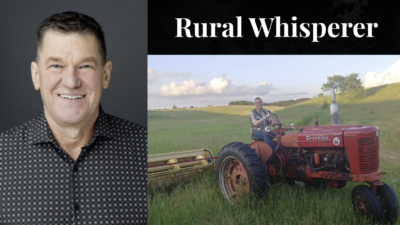
A Postindustrial columnist, farmer, and candidate for Michigan State Senate examines why polling in his home state and neighboring Wisconsin missed the mark leading up to the recent primaries.

In both the Michigan and Wisconsin primary elections, I suspected that polling would be at least 10 points off in both cases.
Why?
It is almost impossible to poll likely rural voters in an agricultural state in August. It is the beginning of harvest season, and we are all outside working – there isn’t time to answer a poll. Nor do pollsters try.
Most polls also capture far too few respondents and haven’t yet adjusted for heightened rural registration and turnout. Pollsters also haven’t figured out the difference between ex-urban rural (rural refers to that as “Country Living Rural”) and rural-rural.
Most polls do not capture a representative pool of voters
I see numerous polls where the organization polled 600 people. That doesn’t even represent the 867 Standard Occupational Classifications of the federal government.
To capture a representative poll, the sample polled would need to include all 867 occupations, plus students, the unemployed, retirees, etc. I can’t imagine a poll having much credibility unless it is polling well over 2,000 people.
Many high propensity voters do not respond to polls
Farmers vote at a very high rate. So do exempt employees. Yet pollsters do not capture these voters – those voters don’t have time to respond to polls. Nor do pollsters really try.
During my entire career as an executive at various corporations, I never once received a request to answer a poll even though I vote in every election.
Not that I would have. I simply didn’t have time. It is as if pollsters know this and don’t try.
Today I receive dozens of requests.
What changed?
Once I became involved in politics, poll requests started ramping up. I receive dozens now. I have made it onto pollsters’ lists. What does this tell you?
It tells me that politically engaged people will be overrepresented in polls.
Beginning in 2019, I began asking people if they had ever responded to a poll. I have yet to encounter a farmer who has. This group is invisible.
An August primary makes this impossible – pollsters poll the Country Living Rural
Michigan and Wisconsin are both large agricultural states. Farm groups try to avoid scheduling anything in August – farmers and agriculture-related voters won’t show up. Even if they tried, I can’t see how a pollster would ever reach these groups in August.
The only way to capture these voters would be on foot. Pollsters sit in cubicles.
I have had the opportunity to ask pollsters and political operatives about exactly which rural voters they are reaching. Invariably, they will point to someone who lives just outside an urban area. While technically rural from a census point of view, that is not the same type of person you’d reach when polling a voter in Kalkaska County.
When you poll someone in a “rural” area just outside of Lansing, it is just as likely that you are going to reach a liberal college or university professor. They have August off, and don’t work in agriculture. Pollsters count them as rural.
When the polling firm then tries to account for increased registration and turnout among rural voters, they use a non-representative rural pool. What they don’t realize is that they polled a university professor who lives in a “rural” area and that their weighting methodology ends up counting that liberal response twice.
Young and urban voters do respond to polls, as do professors and teachers
I know many young and/or urban people who have responded to a poll. The same goes for teachers and professors. Though I can’t find any good data on this, it makes me suspect that the young, academic, and urban point of view will be significantly over-represented in polls.
I deduced that in both Michigan and Wisconsin, the polls would favor the progressive vote by at least 10 points.
Election results bore this out.
This wasn’t a surprise. It was exactly as expected.