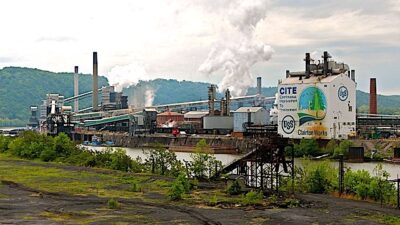
A deadly explosion earlier this month at U.S. Steel’s Clairton Coke Works in Pennsylvania is a tragic example and reminder that dangers within America’s oldest industries are often hidden from view, including hazards posed by asbestos.

The Aug. 11 blast killed two and injured 10 others. It happened during routine maintenance of a coke oven battery in the 109-year-old plant.
These plants transform raw coal into coke, which is fed into blast furnaces to fuel the intense heat needed to melt and burn off impurities in iron ore.
Other elements are added to the molten iron to produce steel. Asbestos was used in those ovens to provide insulation, heat resistance, and durability. That’s precisely why asbestos was widely used across U.S. plants and factories before the 1980s.
Asbestos, a natural carcinogen, has long been linked to mesothelioma, a rare cancer that kills about 2,500 Americans every year. Manufacturers relied on asbestos for fireproofing, insulating high-temperature pipes and machinery components like valves, gaskets, and seals.
In a 2024 study published in the journal Occupational and Environmental Medicine, epidemiologists showed that refinery workers, especially those performing maintenance, develop mesothelioma at much higher rates than the average person.
Globally, an estimated 91% of asbestos-related deaths are directly tied to workplace exposure, and more than 70% of all work-related cancer deaths are connected to asbestos.
In my 16 years of working as a patient advocate, I’ve talked to hundreds of people who worked in steel mills, mines, and industrial plants.
Over and over, I’ve heard the same thing: Workers didn’t know the risks of asbestos or were never warned. And now, decades later, they’re facing devastating and preventable diagnoses.
Federal safety officials had already confirmed the presence of asbestos at the Clairton plant. In 2016, the Occupational Safety & Health Administration (OSHA) fined U.S. Steel $170,000 for mishandling asbestos removal that endangered workers. OSHA also fined U.S. Steel for asbestos exposure violations in 2011. Asbestos is almost certainly still present inside that facility.
“The explosion at the coking plant is a sad reminder of the hidden dangers workers face on a daily basis and the failure of corporations to protect their workers,” said attorney Scott Marshall, who represents victims of asbestos exposure at the Pennsylvania office of the Nemeroff Law Firm.
“Not only does this tragedy demonstrate the immediate harm caused to those who are suffering because of the explosion, but it also serves as a reminder of the long-term injuries caused by asbestos exposure from the many plants and factories along the Rust Belt that used asbestos products without telling their workers about its dangers. Now those workers are having to seek legal compensation to pay for treatment.”
What happened in Clairton isn’t an isolated risk. Across the Rust Belt, many aging industrial facilities still contain asbestos, which is likely breaking down and posing an exposure hazard. These regions are built on steel, auto manufacturing, and heavy industry, all sectors that relied heavily on asbestos for much of the 20th century.
When something as violent as an explosion happens in an aging facility with known legacy asbestos, the risk isn’t contained. Damaged materials can release fibers into the air and be inhaled by workers, first responders, cleanup crews, and residents downwind.
In these communities, generations of workers are unknowingly exposed, often bringing fibers home on their clothes, skin, and hair, unintentionally putting their families at risk. Even today, many people living and working near these sites are unaware of the asbestos still in structures that were never properly remediated.
What makes asbestos so cruel is how quietly it does its damage. The invisible fibers can lodge deeply in the body, staying for decades. Most symptoms don’t appear until 20 to 60 years after the exposure, and they often resemble less severe conditions. Over time, they can cause inflammation and scarring that can lead to mesothelioma, an aggressive, painful, and incurable cancer.
As a nurse and an advocate, I firmly believe that there needs to be more public awareness about the dangers of asbestos, particularly about how exposure happens, the health risks, and what people can do to protect themselves. Too many families are caught off guard, not realizing the threat was in their workplace or even in the dust of work clothes until it is too late. Awareness is only part of the solution.
We need more enforcement of laws and stiffer penalties against companies that do not protect workers and the communities near these facilities from the dangers of asbestos. Routine health screenings for workers who spent their lives in or near these plants and factories are necessary starting points.
If you’ve worked in an older plant or lived near one, don’t ignore the risk of asbestos exposure. And if you know where asbestos is, like in old insulation, don’t disturb it.
Tell your doctor about your work history and talk to your family, because secondhand exposure is real. The Clairton blast is more than a tragedy; it’s a warning of what will happen again if we don’t confront America’s legacy asbestos.
Karen Selby is a registered nurse and a Board Certified Patient Advocate for The Mesothelioma Center at Asbestos.com, with a background in oncology and thoracic surgery.