An Appalachian author and expert writes about how old companies took the coal. Now, new ones powering AI want the people’s power, water, and their quiet.
[The following is an excerpt from James Branscome’s Substack, a must-read for anyone interested in Appalachia. Also, check out his new book Annihilating the Hillbilly Redux: Appalachia’s Struggle Against America’s Institutions.]

The men who came for the coal did not stay.
They arrived with their deeds and their draglines, took what lay beneath the mountains, and left the people to live among the leavings — the silted creeks, the beheaded ridges, the company towns that emptied when the seams played out.
For half a century, I have written about what was carried out of these mountains and what was left in its place. I did not expect, this late in my life, to watch the same ground sold a second time under a new name for an old arrangement.
Yet here we are.
The coalfields of West Virginia, the strip-mined benches of Southwest Virginia, the emptying hollows of Eastern Kentucky — the very land that a century of extraction hollowed out — have become some of the most coveted real estate in the artificial-intelligence economy.
Support your local bookstore by ordering Jame’s Branscome’s new book here.
The companies building that economy need three things in enormous quantities: flat or flattened land, cheap electricity, and water. Appalachia, having been ruined in many areas by mining, happens to offer all three.
The mountaintops were already taken off. The transmission lines were already strung to feed coal-fired power plants that are now going cold. And the politicians, God help us, are once more standing at the county line with the welcome mat in their arms.
This is the newest extraction. It speaks the language of the future — the cloud, the data center, the hyperscale campus — but the structure beneath the language is the one I have traced through every chapter of my book. The capital comes from far away.
The decisions are made in boardrooms and statehouses, not in the communities that live with the result. The benefits flow out, and the costs stay home. And the people who have been on this land the longest are told, as they have always been told, that they should be grateful for whatever falls from the table.
A Monument in West Virginia’s Mason County
In the middle of March 2026, Gov. Patrick Morrisey stood before the cameras to announce what he called a milestone for West Virginia.
A London-based artificial-intelligence infrastructure company called Nscale, backed by Nvidia and other technology giants, had acquired the developer of a project known as the Monarch Compute Campus in Mason County, on the Ohio River north of Point Pleasant, and had signed a letter of intent with Microsoft to deliver some 1.35 gigawatts of computing power at the site.
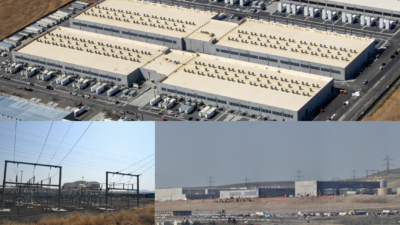
The campus, the announcements said, would rise on roughly 2,250 acres and could eventually scale to beyond 8 gigawatts — a figure that, if realized, would place it among the largest concentrations of computing power on the planet.
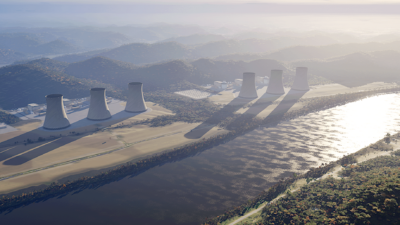
It would run, the developers said, off the grid: powered on site by banks of natural-gas generators capable of producing up to two gigawatts, fed by the same gas that lies beneath the same ground that once gave up its coal. It would be, the state boasted, the first project certified under West Virginia’s new microgrid law — a statute I will come to shortly, because it is the centerpiece of the bad politics this chapter is partly about.
Morrisey framed the deal as proof of the law’s wisdom, calling it “another major vote of confidence in West Virginia’s future” and saying the campus showed the state was “becoming a destination for the industries that will drive the next generation of economic growth.”
Set aside, for a moment, the dollar figure that was not disclosed — Nscale and its partners released no investment number for the first phase — and look instead at the shape of the thing.
A foreign-financed company, assembling outside capital, proposes to build, on 2,200 acres in a poor Appalachian county, a private, off-grid, gas-burning industrial complex to run machines whose products belong to a software company headquartered 2,000 miles away.
The Ohio River Valley Institute, examining the proposal, called it what it is: a highly capital-intensive, non-labor-intensive enterprise whose reliance on gas would add significantly to both local and global pollution.
The campus is a monument. The question worth asking is the one Appalachians have learned to ask the hard way: a monument to whom, and paid for by whom?
There is a sleight of hand in the word off-grid worth pausing on, because the industry uses it to mean the opposite of what it suggests. The boosters present the on-site gas plant as a courtesy to the ratepayer: a facility that makes its own power, they say, will not drive up everyone else’s electric bill the way a grid-connected one would.
Perhaps.
But what the off-grid plant guarantees instead is a permanent gas furnace planted in the county — burning around the clock, fouling the local air, and locking the region into fossil-fuel generation for the life of the machines, at the very moment its old coal plants are going cold.
The cost does not vanish under this arrangement. It merely changes form, from a line on a utility bill to a haze over a valley, and stays home either way.