Public art can do more than revitalize a street corner. It can help lower crime, increase volunteerism, attract tourists, and strengthen communities. Investing in art is investing in a more vibrant city.

According to data shared by Americans for the Arts, the impact of public art in a community goes far beyond increasing property values and reducing vandalism.
Residents in areas where participation in arts projects is encouraged – including low-income neighborhoods – feel more pride in their neighborhood and are more than twice as likely to volunteer. They also commit fewer crimes, are kinder to their children, and have greater trust in their leaders. Their children even score better on Math and English tests.
Mural Arts Philadelphia
Philadelphia’s commitment to public art began 40 years ago and has led to its designation as the Mural Capital of the World. Led by Mural Arts Philadelphia, this initiative has produced over 4,000 pieces of public art. The city’s creative economy provides jobs, engages residents in collaborative projects, and drives significant tourist revenue.
The enviable economic and civic results that come from a concerted focus on the arts are supported by two critical elements: commitment and money. Together, they turn art into a catalyst for change.
ArtWorks in Cincinnati
Cincinnati’s ArtWorks is a compelling example of how public art can create jobs, cultivate young talent, and build community pride.
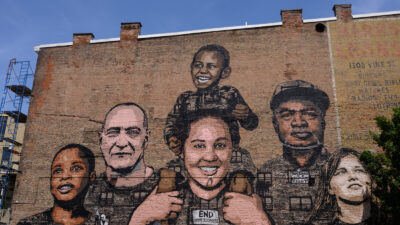
Founded in 1996, ArtWorks’ mission has always been to employ artists of all ages to create stunning murals. Over their 29 years, they have provided jobs and training for more than 3,500 professional artists and 4,000 youths, ages 14–24.
When Executive Director Collen Houston tells the history of ArtWorks, she touts the continued commitment of city leaders to develop and sustain this engine of job creation and public art. The organization was established to raise funds to supplement government funding and manage art projects.
“Every mural has a different funding model,” Houston says. “These include private and corporate donations, sponsorships, and grants.”
In addition to providing artists with income, ArtWorks demonstrates that it’s possible to have a career as an artist.
Gallery 37 in Chicago
The original inspiration for ArtWorks Cincinnati came from a Chicago-based organization called Gallery 37 for the Arts. Located in the downtown “Loop”, their main location offers four floors of spaces for teens to explore the arts. Each year, 1,500 teens from every Chicago community come together to co-create their vision of the world through art, dance, theater, and other forms of expression.
Gallery 37 for the Arts leadership believes they are “showing teens how much they matter and empowering them to build a brighter future for themselves and their communities.”
This data is backed by research. The Americans for the Arts report indicates that arts participation is correlated with lower rates of juvenile delinquency and truancy. Disadvantaged neighborhoods that have the highest rates of arts participation consistently have among the lowest rates of juvenile delinquency incidents.
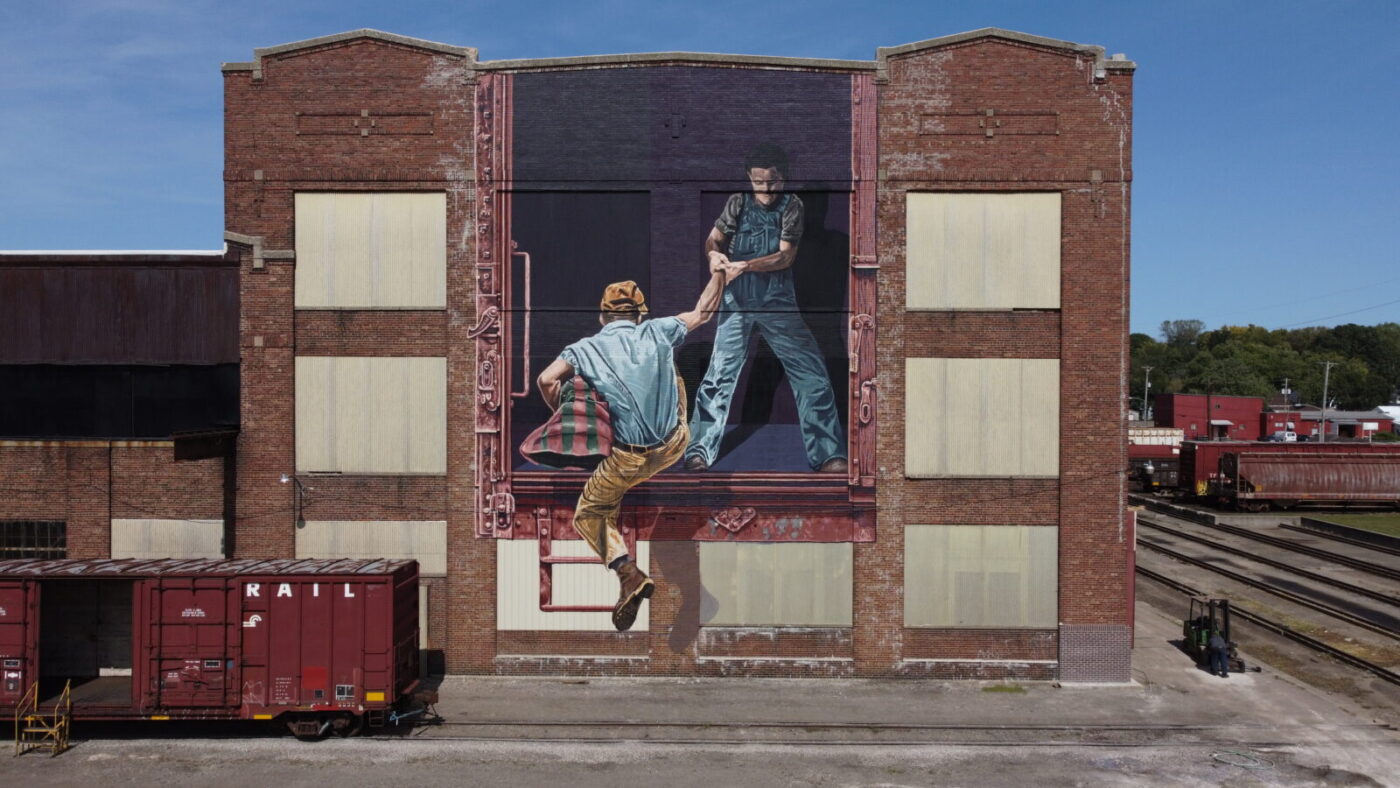
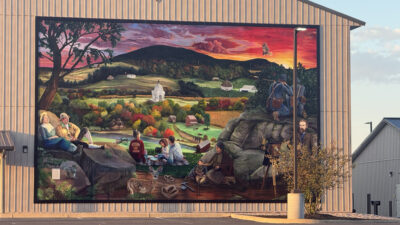
A towering mural of two men climbing into a boxcar on an old train depot in Logansport, Indiana, by Anthony Brooks
From “Starving Artist” to Success
Tamia Stinson, Executive Director of the newly created Cincinnati Artist Network (CAN), is well aware that many artists are frequently asked to work for free in exchange for “exposure”, noting that “exposure rarely pays the rent.”
CAN is the result of a joint commitment by the Haile Foundation and the Cincinnati Regional Chamber of Commerce, designed to create infrastructure for artists to build sustainable, financially stable careers. For example, CAN is compiling a directory of visual, performing, and literary artists across the Greater Cincinnati region to be used by companies and individuals seeking artists for projects. It can also serve as a resource for artists to develop a closer-knit, supportive community.
Ms. Stinson’s goals include providing resources for group health coverage, professional development, and economic opportunities.
Practical Artist Support
Aviatra Accelerators, the organization I lead, recently piloted a program called the Artist Profitability Blueprint. The goal was to help women artists learn to build a profitable, sustainable business around their talents.
We learned a lot about the needs of individual artists as they aim to embrace an identity as business owners. Highly creative people tend to resist routine and tasks they define as drudgery, which is what many associate with business ownership. One way to address this is by reframing business tasks as opportunities for creativity. After all, business is essentially about creative problem-solving.
Another common challenge is a lack of formal business education. This can lead artists to avoid learning about finances and standard business practices.
However, once an artist has determined to make a solid living from their creative talents, these obstacles can be overcome. By seeking help from organizations like the Small Business Development Centers across the country, SCORE mentors, library programs, and nonprofits like Aviatra, no one has to go it alone.
The Power of Commitment
Whether a community supports individual artists or provides the infrastructure for a true, thriving creative economy, the benefits are widespread and worthwhile.
The first step is the collective commitment of the residents and civic leaders. The second is to create or leverage a nonprofit organization to raise funds and manage the programs.
With a strong will, any community can provide an environment that supports and encourages the arts.