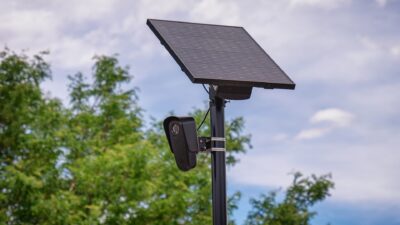
A new Postindustrial columnist sounds off on the use of Flock cameras in her Ohio community and the construct of “safety” for some, but not others.

If we want public safety for all, we need to agree on what that means — and be honest about what’s missing.
The systems built by white and wealthy men when this nation was created prioritize their safety, while denying the humanity of Indigenous people, Black people, poor people, immigrants, women, and children.
That’s not ancient history. It’s the operating system we’re still running.
Columbus City Council is considering whether to end its contract with Flock Safety, the company behind thousands of Automated License Plate Reader (ALPR) cameras nationwide.
The answer should be yes — because it affects all of us, isn’t fair, and our money should be spent on things that actually reduce harm.
It affects you
A single law enforcement query of the Flock system can access data from more than 83,000 cameras nationwide. If you own a car that’s been driven in the United States, your plate has been read — probably many times. And with Flock’s documented 1-in-10 error rate, it’s probably been read incorrectly.
Ask Brittney Gilliam. She was pulled over with her children and held at gunpoint after an ALPR incorrectly matched her Colorado SUV to a stolen motorcycle with Montana plates.
Or Denise Green, who was held at gunpoint after a camera misread a “3” as a “7.” The list keeps growing as the cameras multiply.
Police in Texas used ALPR data to track a woman who had an abortion, then tried to file criminal charges against her. Hundreds of ALPR searches have tracked No Kings and 50501 protesters. Officers even used surveillance tools to stalk current or former partners. Flock cameras gave them a retroactive road map to spy on women.
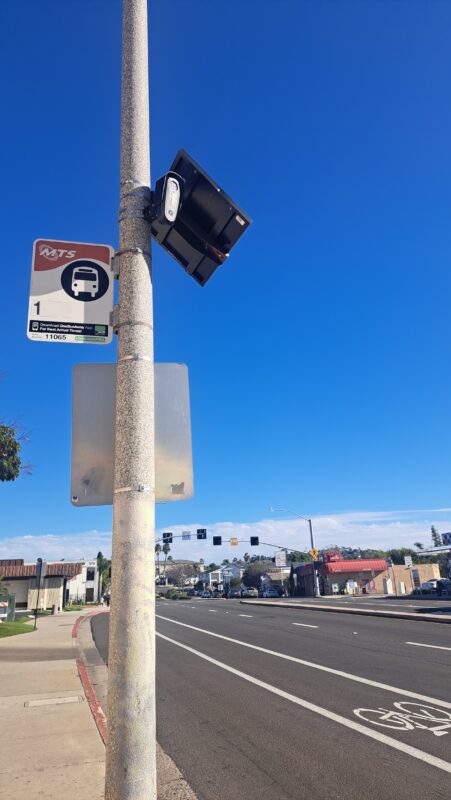
Flock camera in La Mesa, California (Image courtesy of WikiCommons)
It isn’t fair
We often hear, “If you’re not doing something wrong, you have nothing to worry about.”
However, enforcement has never been equal.
We see the double standard in policing everywhere. Cleveland police shot and killed 12-year-old Tamir Rice less than two seconds after arriving on scene.
Akron police shot 15-year-old Tavion Koonce-Williams immediately upon arrival. Both had toy guns.
Neither officer tried to verify the threat or de-escalate. Meanwhile, Warren, Michigan officers calmly talked down a white teen holding a real gun.
More ALPR cameras are deployed in neighborhoods with higher percentages of Black residents, reinforcing a crime bias already baked into the system. Crime exists in white communities too.
But it isn’t always seen, or even treated, as a problem. We had drug users and dealers in my all-white hometown when I was a teen. But if they got caught, they were more funneled into treatment programs, not juvenile detention.
A recently released Flock audit found 15,577 possible immigration-related searches pinging Columbus’s network since 2024. What happens to me, a white woman, if a cop pulls me over without my license? I get a warning.
What about a Latina woman who speaks English with an accent? That stop looks very different, at least in many parts of Ohio.
Finally, Flock cameras do not prevent crime
That’s not even their purpose. ALPRs gather evidence to use after a crime happens.
So ask yourself, are you truly willing to be pulled over and held at gunpoint because a license plate reader made a mistake? Are you OK with that happening to your child? Or do you want your tax dollars to go to systems and programs that actually improve our communities?
We know what actually works
It’s not more surveillance, but more trust. Right now there’s not a lot, and the debate over Flock is not doing anyone any favors.
The law enforcement strategy that developed out of the southern slave patrols and northern constables is not one that brings people together; it’s one of punishment, coercion, control, and repression (incarceration). This approach simply creates more anger, isolation, and suffering — which creates more crime.
Investing in public transportation, education, housing, mental health, and alternative response teams — as we have for fighting fires — and building alternatives to incarceration are solutions that require urgent investment.
Violence against women and children, suicide, and gun violence are epidemics that cross race and income. No automated license plate reader will fix them.
Flock Safety continues to obstruct any attempt at accountability or transparency — even fighting to ban the HaveIBeenFlocked website, which lets people check whether their vehicles appear in the system.
Amazon, no one’s model for corporate responsibility, cut ties with them.
Columbus should too.
As I wrote in The Land, “This country is filled with hurt people who hurt other people. That’s not a city problem — it’s an us problem.”
Let’s start fixing it. Let’s put the money we save by canceling Flock contracts toward tackling these priorities.