A Postindustrial columnist and scholar shares transatlantic lessons in regional economic transformation.

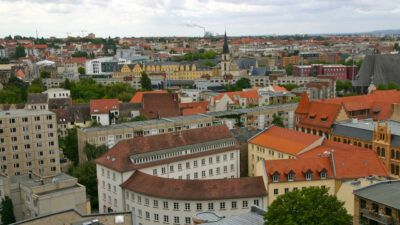
The symbol that signals you are in Halle, Germany—seen on ancient buildings dating back to the 1300s and on the city coat of arms—is two crescents surrounding stars.
These represent the salt crystals and threshing pans used in the primitive industry that built the town. This historic medieval community, sporting structures undamaged by World War II in Germany’s former East, was born of the great wealth its salt mines afforded.

It grew and thrived through several waves of development, as a salt-mining center, then a trading and religious hub, and finally as a chemical industry powerhouse under the German Democratic Republic (GDR) times.
Halle’s development arc includes the 50,000-person Neustadt—or “Chemiearbeiterstadt” (chemical worker city)—which was built outside the medieval center in the 1960s to house workers for local chemical plants.
Planned at the time as a self-contained socialist workers’ paradise, the city’s industrial base was dismantled and Neustadt was partially abandoned when German reunification brought dramatic economic restructuring to the region.
I was in Halle as part of a U.S. delegation, representing our U.S. industrial heartland communities. We were from places very similar to Halle—but with less ancient history—following a similar arc of development. And we were all looking to learn and share lessons on how once-thriving industrial cities, whose signature industries have largely vanished, can find new economic purchase and place in a very different economic era.
Our delegation included urbanist and author Nicholas Lalla, who had recently helped one of the original U.S. oil boom-towns—Tulsa, Oklahoma—begin to spark a new high-tech innovation economy.
Another participant was former Pittsburgh Mayor Bill Peduto, who had coached Pittsburgh through the collapse of its signature steel industry, towards building a new future on the backs of the city’s top-tier research Universities.
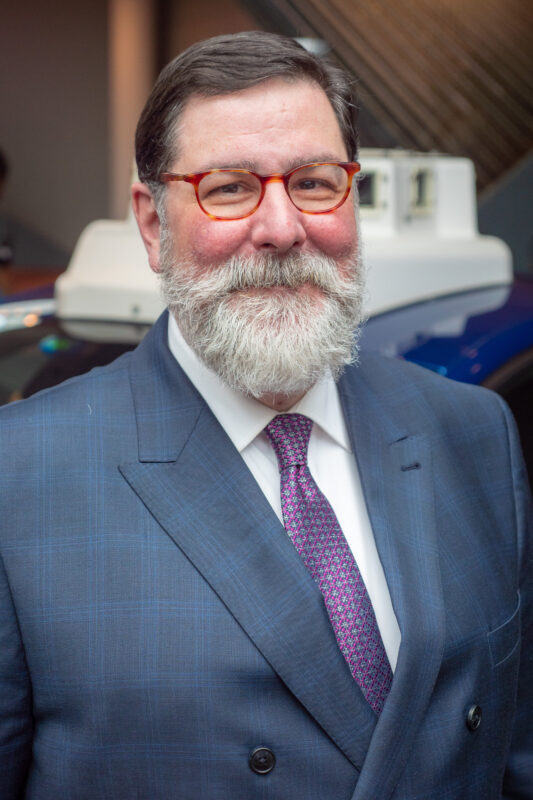
Former Pittsburgh Mayor Bill Peduto
There was also Steve Patterson, Mayor of Athens, Ohio, nestled along the Appalachian coal country and industrial corridors of the Ohio River Valley.
I brought my experiences as a Michigander and ringleader of the Heartlands Transformation Network, a collaborative transatlantic network of economic changemakers from over 30 countries, sharing practical insights on heartland-region economic transformation.
Michigan is home to Detroit, Lansing, and Flint—the cities where the automobile industry was born, and where today communities and their residents are living through the same cycle of economic and cultural upheaval that we were learning about in Halle.
Our hosts from the German Ministry of Economic Affairs and Energy (BMWE) and the Federal Ministry for Housing, Urban Development and Building (BMWSB), with assistance from the German Society for International Cooperation (GIZ), had organized an international convening entitled: Reinventing cities and regions: Turning economic changes into opportunities in Halle.
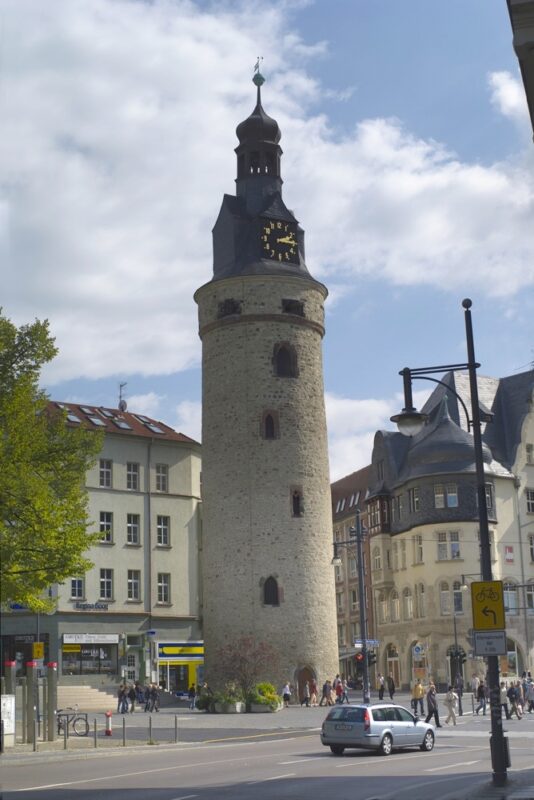
This former salt-mining center and then coal and chemical economic powerhouse of the former GDR was emblematic of the many former industrial and extractive regions on both sides of the Atlantic that experienced an economic rise, then a fall, and now a tentative transition to a new era of growth and economic opportunity.
Shared stakes and strategies for community regeneration
With other conference attendees, we toured Halle’s historical and industrial legacy sites—many now being repurposed to meet the challenges and economic opportunities of a new economic era.
- The Weinberg Campus Technology Park, where former Nazi-era and Soviet military barracks and GDR-period engineering and mathematics research centers were now converted to a growing innovation campus—home to life-science and biotechnology research and teaching institutions, and an array of bio-technology enterprises and new business startups spilling out of its business incubation and acceleration center.
- The Lena Chemical Campus, where once 25,000 workers toiled in one of Europe’s largest state-run chemical factories, is now a modern platform for dozens of private international chemical companies that efficiently manufacture cleaner, greener, sustainable materials and chemical-derived products.
- Outside medieval Halle, where salt and trading fortunes had built ornate mansions, churches, and office blocks, we toured the regenerating Neustadt. This planned socialist city of towering apartment blocks and integrated commercial, retail, cultural, sports, and educational services had been designed to meet the daily needs of a carefully planned and equitably delivered socialist society and economy. A hoped-for “worker’s paradise,” which had been largely abandoned after German reunification, Neustadt is today being reborn as a home to immigrants and Ukrainian refugees, and as a place where younger families might find an affordable home with a good quality of life, community assets, and activities.
In Halle, our U.S. industrial heartland leaders witnessed eerie analogues to our own communities, both in the economy and society that “once was,” as well as in the strategies and processes being nurtured to build, on similar industrial and mining community “bones,” a brighter economic future.
We shared the stories and the lessons of regeneration from our U.S. industrial heartlands, including communities in my state, such as Detroit. Like Halle, Detroit was born along a river with deep, accessible salt mines. At the beginning of the twentieth century, the invention of the automobile and the mass-production assembly line, first introduced by Henry Ford, powered an economic revolution and an explosion in employment and population growth. Detroit and auto manufacturing communities such as Flint and Lansing became a seeming “worker’s utopia,” where good-paying jobs were plentiful, and communities hummed with life and optimism.
But as our auto factories decamped to the suburbs or disappeared altogether, hope dimmed, neighborhoods fell into disrepair, whole blocks of middle-class houses were abandoned or burned out, and nostalgia reigned for the era of security and stability afforded by a paternal employer—in our case, the Big Three automakers. Only in recent decades have new shoots of growth returned to Detroit, the iconic industrial center. Public-private university partnerships and new business development campuses drive these new seeds of growth:
- First Compuware Computer moved its corporate headquarters back downtown. It spurred the redevelopment of the Campus Martius district and the Woodward Avenue Corridor, with its iconic theater, arts, and cultural venues such as the once-abandoned Fox Theater, now alive again.
- Ford Motor’s new mobility R&D center and Michigan Central’s new tech-firm incubation lab in the once-abandoned Michigan Central train station complex.
- Henry Ford Health Systems’ medical research, teaching, and health delivery complex and bio-technology park;
- College for Creative Studies Taubman Center for Design Education, which includes a creative industry feeder school developed in collaboration with Ford Motor, is housed in the historic Argonaut building, General Motors Corporation’s first automobile design studio.
- University of Michigan Center for Innovation (UMCI), a 200,000-square-foot, $250 million research and education hub currently under construction in downtown Detroit, is expected to open in summer 2027.
And as in Halle and so many other cities—with the assistance of forward-looking, business-led, immigrant-welcoming organizations such as Global Detroit—new immigrants from dozens of Middle Eastern, South Asian, Latin American, and South American countries have been agents of the Detroit community’s repopulation: neighborhoods are being cleaned up and rehabilitated, and new businesses are being created. Once hollowed-out Detroit neighborhoods have been brought back to life, including Hamtramck, Southwest Detroit (Mexicantown), and Dearborn (today a thriving community sporting the largest and most established concentration of Arab Americans outside the Middle East).
Bill Peduto detailed Pittsburgh’s evolution from the most concentrated (and one of the dirtiest) heavy industrial production areas on earth to a cleaner, greener, more livable community, which began in the 1940s (spearheaded in the post-war years by the business leadership organization, the Allegheny Conference on Community Development).
Pittsburgh became a thriving corporate headquarters city in the 1970s, as the business leaders recruited more Fortune 500 companies than any American city except New York and Chicago. When its signature steel industry totally collapsed in the 1970s, Pittsburgh witnessed another rebirth—a renaissance based on research and higher education. As Peduto told the audience in Halle: “We realized that the city still had some ‘factories’—they were just very different ones that were not down along our rivers but were sitting up on the hill.”
These were the knowledge factories of top research universities Carnegie Mellon and the University of Pittsburgh, with its sprawling medical research and teaching center, UPMC. Pittsburgh’s business, civic, and political leaders teamed up. It brought new investments in national R&D and innovation hubs to these institutions and their top-ranked schools in medicine, computers, and data science.
These investments, and the universities’ attraction and retention of some of the world’s top talent in these emerging disciplines, has made Pittsburgh a global center for technology innovation in bio-medicine, AI, robotics automation, computer science, and engineering—and spawned a thriving high-tech startup scene, making Pittsburgh and its own Three Rivers a new, “Midwest Silicon Valley.”
In Tulsa, New York-based technology and innovation expert Nicholas Lalla was invited by the community’s philanthropic leaders to help the community look around the corner to find “what might come next” when overreliance on its signature oil and gas industry (and the home-grown business giants that dominated those industries) might run their course. Lalla found in Tulsa an untapped, rich cultural history—where one of the nation’s most significant and thriving black business cultures and community, that had been purposefully snuffed out when Tulsa’s so-called “Black Wall Street” was decimated in the Tulsa race massacre of 1921.
Lalla also saw that, given Tulsa’s energy resources and industrial history, it had some underleveraged economic assets on which to begin building a more diverse and modern tech economy.
- An aviation industry that had spawned early competencies in fast-growing drone technology;
- An energy industry that had laid the foundation for the new greener and more sustainable energy production, distribution, and use technology systems—arenas in which the whole world needed solutions;
- Education and research institutions with solid competencies in fast-growing sectors such as virtual health care and cybersecurity.
With support from the George Kaiser Family Foundation, a leading Tulsa-based private philanthropy, Lalla and partners created Tulsa Innovation Labs. This coordinating body helped Tulsa attract outside investments, organize its existing resources and economic development priorities around these new opportunities, and position it on a path towards a new innovation-led economy.
Mayor Stave Patterson of Athens, Ohio, shared the different experience of his community and others like it in the Ohio River Valley. This industrial and chemical industry corridor runs from Pittsburgh in the East to St. Louis (Missouri) and the Mississippi River in the west. Athens was part of the coal country of the upper Ohio River Valley, and much of the traditional industry had long since disappeared.
Patterson recounted in Halle, “As mayor, I worked with regional leaders to move past the nostalgia of the old boom-town economy and toward a different future—investing in clean energy initiatives, supporting sustainable economic development, leaning into our woods, forests, rivers, mountains, and waters as a fulcrum for a new (and growing) outdoor recreation and lifestyle economy—helping communities imagine prosperity beyond coal.”
The goal was not to erase the past but to build on it, transforming former industrial regions into places where renewable energy, education, innovation, and a robust quality of life could drive new growth.
A common drive to rebuild pride
Despite obvious differences in history, culture, and language, Halle, Detroit, Tulsa, Pittsburgh, Athens, and all our towns and cities in the industrial heartlands of North America and Europe were built around similar things: food processing, coal mines, steel mills, and manufacturing plants for chemicals, oil, and gas.
A most important similarity is the proud, hardworking people—men and women — who came to these regions and built these industries, which in turn powered our national economies. People are all looking for the same things: a better life. A job to support one’s family. A bright future for the children.
In all our communities, when traditional industries declined, and the promise of a better life became empty, residents were left with uncertainty, sometimes anger, and sometimes despair. Their jobs, the signature industries—such as coal, steel, or chemicals—were both the community’s and the workers’ identity. Their disappearance left community leaders and residents searching for a new source of identity and hope.
If new opportunities are not found for residents of communities that have lost their traditional employment anchors, too many come to feel ignored and disaffected. They become angry that leaders in distant national capitals appear unwilling or unable to help them rebuild their communities.
Too often, these residents are turning to leaders and movements that offer simple solutions or a scapegoat for their woes—movements such as the AfD in Germany, MAGA in the U.S., and Reform in the UK.
But as in Halle and in the U.S. communities represented in this most recent transatlantic exchange, when leaders such as our mayors pull the community together and chart a course toward a brighter future, they can reap the rewards. It is possible to successfully help constituents move past the nostalgia of the old boom-town economy—and embrace and benefit from a brighter future. A future that does not divorce itself from the past—but builds upon it while celebrating the industries that made us great, taking them into new directions, new product niches, and diverse opportunities.
At a time when the transatlantic alliance and shared effort among national-level leaders are being pulled apart, the bonds of our common history and mutual interest in sharing our regeneration successes continue to bring leaders together at the subnational level. This is a project that is ever more important if we are to collectively renew the promise of economic opportunity for those who may be pushed away and disillusioned by our shared democratic projects.