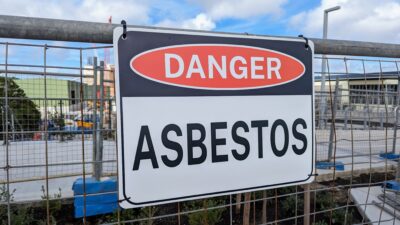
Asbestos use may be a relic of the industrial past. However, a nurse and Postindustrial columnist writes that some in our community continue to suffer from exposure to the cancer-causing material.

A recent $83 million verdict against an Indiana-based maker of ceramic products has put a spotlight on mesothelioma, a rare asbestos-related cancer that kills nearly 3,000 people each year.
The case involved a Boston woman who died of mesothelioma in 2022. Her family claimed she was exposed to asbestos-contaminated ceramics products manufactured by American Art Clay Co., based in Indianapolis. They said she was exposed to the contaminated products for 30 years while working at her mother’s ceramics studio in Massachusetts.
According to court records, a jury in September found the company engaged in “malicious, willful, wanton, or reckless conduct” by failing to warn users of its products. Company officials argued that its products never contained asbestos or talc, which is prone to asbestos contamination.
Most products in the United States no longer contain asbestos, a popular mineral used before the 1980s to strengthen and fireproof products. But as a registered nurse at The Mesothelioma Center at Asbestos.com, this case raises the alarm for people in Indiana who worked with legacy asbestos products as part of their jobs.
According to the latest CDC statistics, Indiana ranks number 17 in mesothelioma deaths, and it ranks number 12 in lung cancer deaths. Asbestos is among the carcinogens that lead to lung cancer.
Mesothelioma is a cancer whose symptoms do not appear until 20 to 60 years after asbestos exposure. Symptoms such as coughing, chest pain, and fatigue can mimic less severe conditions. I tell people to speak with a mesothelioma specialist if they’ve had past asbestos exposure and are experiencing these symptoms.
As with other Postindustrial states, Indiana has a long history of asbestos use in the manufacturing industry. Several sites across Indiana are known for asbestos exposure.
In 2021, Rolls-Royce completed a $600 million renovation of its Indianapolis facilities, including the abatement of 2 million pounds of asbestos. A 1986 CDC report showed that a federal building in Evansville contained amosite and chrysotile, two types of asbestos.
General Motors, which opened the Fort Wayne Assembly in Roanoke, Indiana, in 1986, used asbestos in several automotive products, including gaskets, heat barriers, hood liners, brake pads, and other components. Those who handled these products were at risk of asbestos exposure.
In fact, GM filed for bankruptcy in 2009 after facing financial losses from mounting asbestos claims. As part of its Chapter 11 bankruptcy reorganization, the company established an asbestos trust fund to pay for current and future asbestos claims.
The Occupational Safety and Health Administration cited Nuturn Corporation, a former brake manufacturer in New Castle, Indiana, for asbestos exposure in 1984 after a concerned union member sounded the alarm. Pulmonary tests and chest X-rays of almost 200 plant workers revealed several complications from the asbestos exposure.
Laborers in Indiana who worked in jobs such as auto, chemical, electrical, and rubber manufacturing were at high risk of asbestos exposure. Those who worked in coal mines, metal works, and the oil and gas industry were also at risk of exposure.
However, exposure to asbestos doesn’t stop at the manufacturing level. Teachers and students who attended schools, colleges, and universities in Indiana built before 1980 may also have been exposed to asbestos during school renovations.
For example, Susan D., whose last name has been omitted for privacy reasons, attended college in South Bend, Indiana, where she believes the asbestos exposure happened. Doctors diagnosed Susan with mesothelioma at 72 years old. She remembered walking in tunnels that connected one part of the campus to another.
“I remember these big heating tubes going through the tunnels on the ceiling, and I remember white material floating down many times, and then it was on the ground,” Susan told us.
Asbestos was often used as insulation in buildings between the 1930s and 1980s, especially around pipes. “We were 17 years old, kicking what we thought were feathers at the time, but it was asbestos,” Susan said.
Exposure can also happen to homeowners renovating an older home where asbestos may have been used as insulation. I highly recommend getting an asbestos inspector if you plan to renovate an older building. It’s best to let those experts test building materials before you decide to start knocking down walls.
Military veterans across the nation were also exposed to asbestos on military bases. The military used asbestos to strengthen barracks and fireproof paint.
For example, Air Force veterans may have been exposed at Grissom Air Reserve Base near Kokomo, Indiana, where asbestos exposure had been reported. Army veterans may have been exposed at Camp Atterbury Army Base in Edinburgh, Indiana.
Asbestos exposure may also occur secondhand, which is also known as secondary exposure. Common examples of this type of exposure include washing the clothes of someone who worked directly with asbestos products. That type of activity could affect others living in the same household.
Susan also told us she may have been exposed to asbestos from her father’s work clothes. He worked for a company that built yachts and helped build boats in Detroit, Michigan, that were later shipped to Norway during WWII. Shipyards were high-risk exposure sites.
Chances are, you likely won’t get exposed to asbestos these days. But it’s best to know all the possible ways you can become exposed to minimize the development of mesothelioma, lung cancer, or other asbestos-related diseases.
If you do have a history of asbestos exposure, I recommend you see a specialist, especially if you are experiencing symptoms. Early detection is your best option.