At a time when ICE agents are terrorizing people of color, Postindustrial’s art columnist reminds us of the important role of art in celebrating different cultures and ideas.

I had the pleasure of attending the art fairs, Frieze LA and Felix Art Fair, in Los Angeles this past weekend. It’s always a flurry of people, many flying in from the frozen East Coast for warm California weather.
With over 200 galleries collectively between the two fairs, there is plenty of art for visitors to consider.
Yet what caught my eye as I wandered the crowded aisles was the art that spoke to inclusion, and recognizing the diversity that exists in our country, especially as ICE agents continue to raid American streets and artists, such as Victor “Marka 27” Quiñonez, are being censored.
Quiñonez, an artist whose work is inspired by his own immigrant experience, deals with racism, identity, and confinement, whether through deportation or incarceration.
His solo show “Ni de Aqui, Ni de Alla (Not From Here, Not From There) was scheduled to open at the University of North Texas (UNT) in Denton, Texas’s College of Visual Arts and Design Galleries.
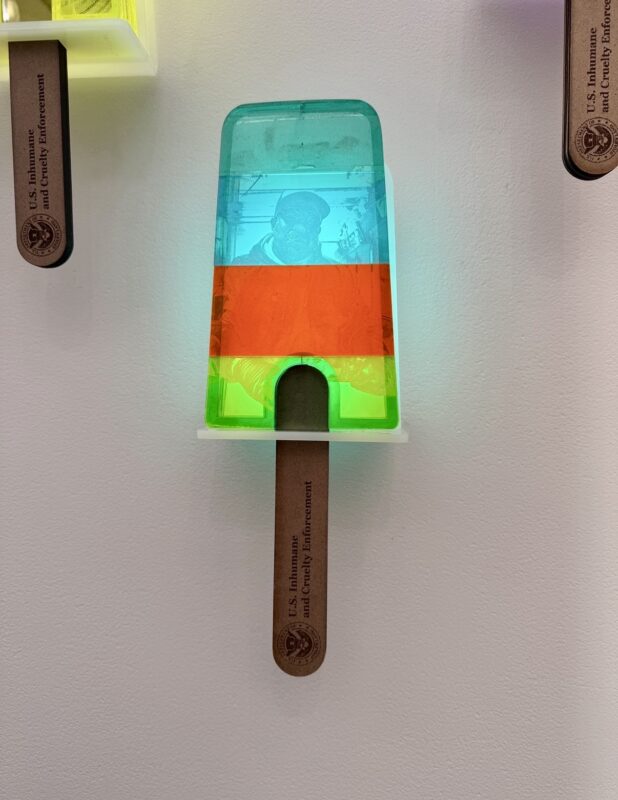
By Victor “Marka 27” Quiñonez
The University ultimately ghosted the artist and refused to provide an explanation. Yet another casualty of a conservative administration and the institutions that refuse to stand their ground in speaking up and supporting not only artists, but also politically charged messages.
Which is why I found it invigorating to see art that pushed the DEI envelope within the fairs. The artist Lauren Halsey’s mixed-media piece “LODA PLAZE III,” at David Kordansky Gallery’s booth, highlights the architecture of an urban community landscape.
In contrast, a terracotta sculpture by Venezuelan-American artist Marisol, titled “Social Security,” features the artist’s cast face and engraving that focuses on her identity as an artist.
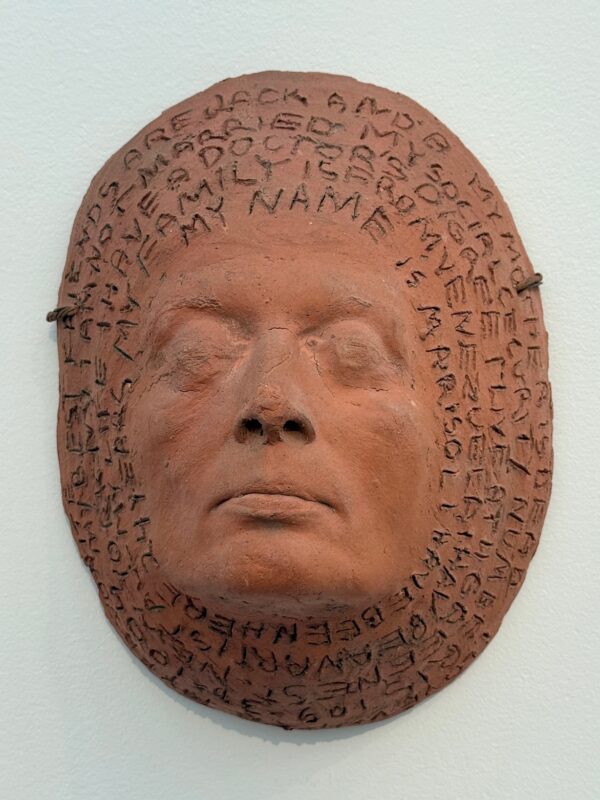
Social Security by Venezuelan-American artist Marisol
The self-taught Nigerian artist Collins Obijiaku, featured in the Roberts Project booth, presents Black characters with often haunting looks that stare back at the viewer, making it difficult to look away and leaving one to question the story behind the gaze.
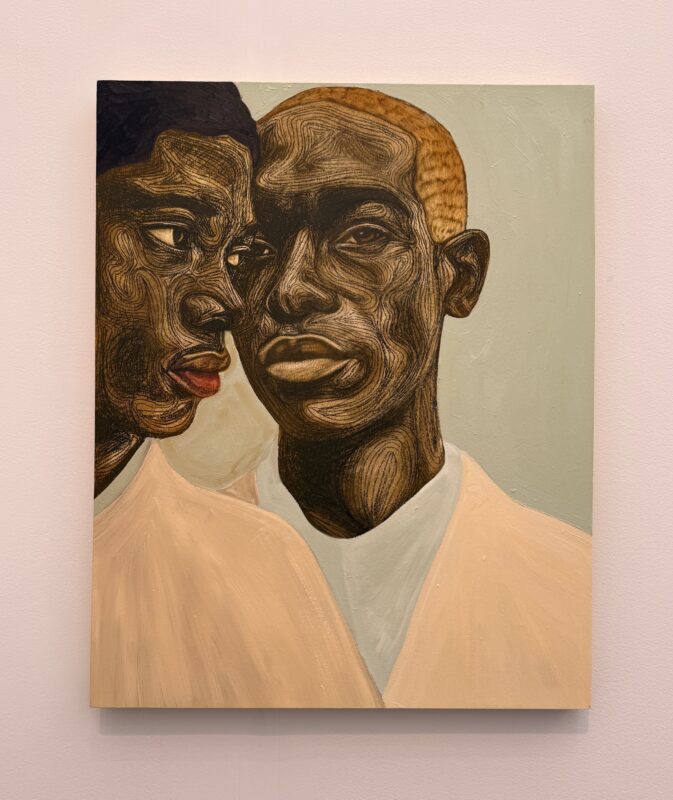
By Nigerian artist Collins Obijiaku
Yet my favorite work of the show was by the late American painter and installation artist Noah Davis. Davis, along with his wife, founded the Underground Museum in Los Angeles.
His work, as described by Davis, included “instances where black aesthetics and modernist aesthetics collide.” Davis’s work is known for melancholic portrayals of blurred black figures, often against barren landscapes, yet the piece I saw at Frieze had a bright, colorful background supporting his classic figures.
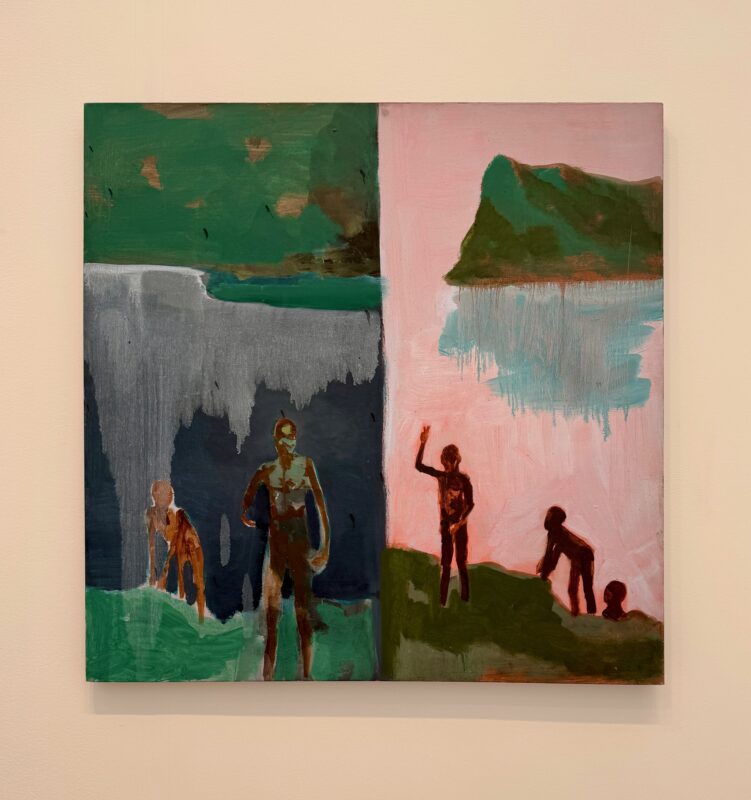
In a world that is currently trying to strip away otherness while silencing artists and attempting to wash away black and brown bodies, it is refreshing to know there are places where culture and diversity can be celebrated. Or in instances such as Quiñonez’s, the attempt to silence may turn to screams through student protests and added opportunities.