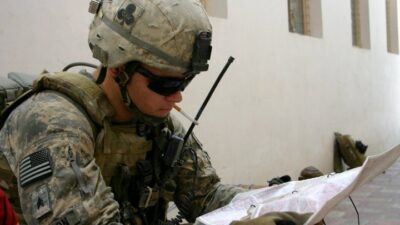
America having an all-volunteer military means far fewer serve in uniform than in generations past, creating a “warrior class,” a tiny minority whose sacrifice and service go largely unappreciated.

Veterans Day is that time of year when we should reflect on and appreciate the sacrifices those who served in the military made for us.
However, considering how few Americans bear this tremendous responsibility (far less than 1% are active-duty service members), a single day in honor of veterans seems far too little.
Give them a week – better yet, an entire month – when veterans get free coffee at Starbucks, discounts on gas and groceries, and hell, on homes and cars, if we’re being fair.
Because the fact is, for a country that has spent the vast majority of its existence at war, and in recent years, even more so, a staggeringly small percentage of Americans serve in the military.
According to data from the US Census Bureau, the percentage of the US population with military service under their belts has declined dramatically over the decades.
In 1980, about 18% of adults in the United States were veterans.
As of 2022, the share of those who served had fallen to 6%.
You may be wondering:
“How is that possible considering the decades we spent fighting in Afghanistan, Iraq, and Syria, not to mention numerous other military actions and deployments to more than 100 countries around the globe?”
It’s because those who serve these days do so for longer on multiple deployments, taking on more responsibility than previous generations. The rest of us can sit back comfortably at home, while they risk their lives and miss countless holidays and birthdays with their families.
And not only are they sacrificing more, so we don’t have to, but their efforts, and our lack thereof, have created a fundamental disconnect between those who never put on the uniform and what has become known as America’s “warrior class.”
That separation, and our lack of comprehension and empathy for what they do, also makes it more difficult for veterans to integrate into civilian life once they’ve left the military.
I can somewhat imagine how veterans feel after coming home from a tough deployment to a nasty place where hardships others could never understand were aplenty.
Back when I was covering the wars in Afghanistan and Iraq, I would sometimes get questions about “what is it like over there?” only to see folks’ eyes glaze over after the first 15 seconds of my recounting.
They weren’t asking because they really wanted to know – they were making small talk so they could feel like they cared, if only for a few moments.
For veterans who’ve survived the horrors of war and seen their fellow service members make the ultimate sacrifice, what they’ve experienced can’t be explained in a sentence or two, and it’s fodder for casual chatter.
It can be a profoundly impactful experience that far too few can comprehend because they haven’t done likewise.
And because only a small percentage of Americans serve, we treat the military’s role in our foreign – and now domestic policy – as we would tax collectors and other government workers, as though there aren’t real consequences to putting them in harm’s way.
That’s why our veterans deserve more than just a day.
They should get an entire month of preferential treatment – including cutting the line at Disney World for them and their families – so that the rest of us would pause and think for more than a moment on a single day about what they’ve done to deserve their much-earned preferential treatment.