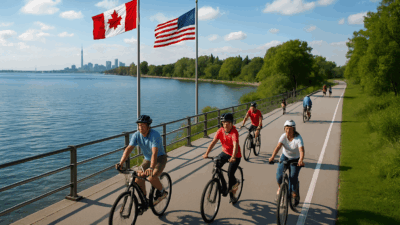
Momentum is building for the completion of the Great Lakes Waterfront Trail, which will bring the US-Canada Great Lakes region and communities closer together.

Local and state leaders in the eight Great Lakes states are working to connect residents and visitors from around the world to the largest chain of freshwater lakes on the planet and St. Lawrence River waterways, including links across the border to Canada’s Great Lakes Waterfront Trail.
Most of Canada’s 2,250-mile Great Lakes Waterfront Trail is already in place, stretching from the St. Lawrence River at the Ontario-Québec border along the Canadian coast of Lakes Ontario, Erie, and most of Lake Huron.
This greenway route of connecting roads and off-road trails already joins more than 100 communities, as well as numerous Indigenous nations.
A plan to complete the trail on the northern shore of Lake Superior is on the drawing board.
Not to be outdone by neighbors to the north, the dedicated work of state and local governments, and regional trail organizations on the US side, is putting in place thousands of miles of trails along the American Great Lakes coastline.
Now, all these US partner organizations are joining together with help from the National Park Service’s Rivers, Trails, and Conservation Assistance Program to identify completed and planned sections and gaps in the existing trail network.
This lattice of bike, pedestrian trails, greenways, parks, and conservation areas lining the lakeshore is about more than creating unforgettable trail experiences. The trail will bring together the people and communities on both sides of the border, making these waterfront communities much more attractive places to live, work, play, run a business, and visit.
There are substantial economic development benefits that will come with the completion of the Great Lakes Trail for the communities lining the coasts, many of whom are still working to reboot local communities once dependent on manufacturing, heavy industry, and shipping.
I’ve written before about the enormous economic development impact of rehabilitated industrial waterfronts opened up for new public access and multiple uses along America’s Great Lakes freshwater coast.
Thanks to the sustained federal funding enabled since 2009 by the Great Lakes Restoration Initiative, much of the Great Lakes coast in the US is already being cleaned up and restored. The harbors are ready once again to become vital centers of economic rebirth.
Numerous studies detail the significant economic impact when greenbelts, water, and non-vehicle trail networks are established in states, such as those tied together by the proposed bi-national Great Lakes Waterfront Trail.
A completed Great Lakes Waterfront Trail on the US side, with key crossings and connections across the border to Canada’s Waterfront Trail, will increase use and enjoyment by residents and visitors on both sides of the border and drive community economic renewal and revitalization all along this freshwater coast.
The trail, once completed, will also serve to mark and market the entire Great Lakes Region –once pejoratively derided in both nations as “Rust Belts” – as a spectacular scenic and historic land and waterscape.
The trail will reboot the entire region as a newly vital center of commercial activity for both countries and help cement its unique identity as the world capital of freshwater and fresh ideas for the future.