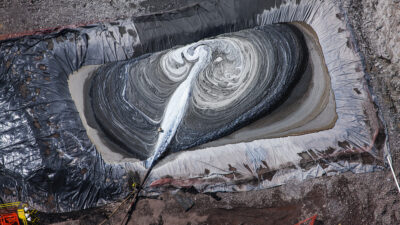
Photographer J. Henry Fair’s striking aerial images and sobering words warn of the devastating impact fracking has on communities and the environment, an impact likely to increase amid soaring demand for power-hungry data centers.

It all started when a man named George Mitchell, considered the “father of the shale gas revolution,” had the idea to drill down to the gas-bearing shale layers, drill horizontally through the rock, and then pump water at high pressure to fracture the rock and release the gas trapped there.
And with that, hydro-fracking was born.
Shortly after, the United States Geological Survey released a report which said that these layers of shale contain”100 years of recoverable supply in one shale layer.
Shades of the Gold Rush.
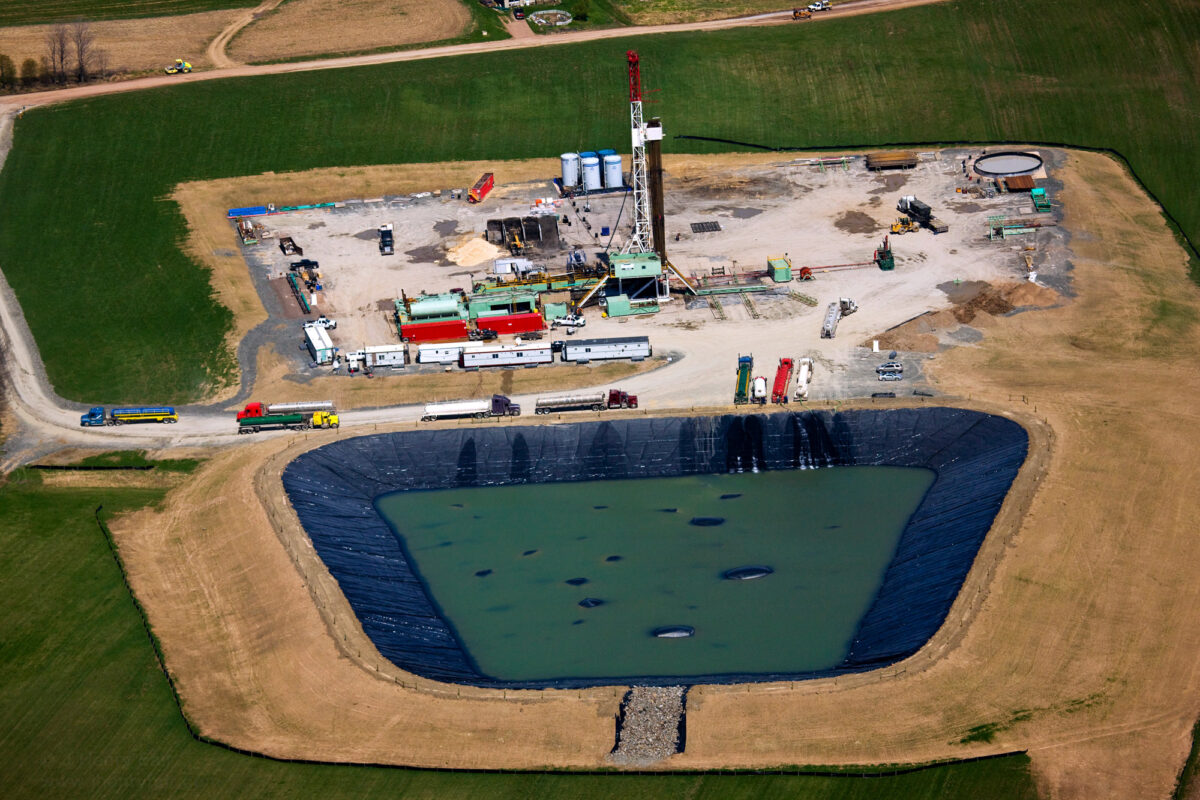
Hydro-fracking site with drill rig. A water reservoir is filled by trucks for later fracking, Columbia Township, Pennsylvania. Hydro-fracking consumes tremendous volumes of fresh water, which, after being mixed with a cocktail of chemicals, and absorbing radioactive elements in the ground, becomes a tremendous toxic waste disposal problem when pumped out of the well. Often that large volume is injected into depleted wells, where it contaminates groundwater and causes earthquakes. Flight thanks to LightHawk
There was little to no discussion of the freshwater depletion, the massive wastewater discharge, or the significant methane pollution associated with the process.
The advent of hydro-fracking in the USA had several consequences.
With the oversupply of natural gas, prices in the USA dropped to 1/3 the global price, with numerous consequences: cheap energy in the USA spurred economic growth, and investors were unable to recoup their outlays because natural gas was a local commodity. It was impossible to ship to markets where prices were higher.
There were other results as well: Air, water, and climate were severely impacted by the extraction process, farmland was destroyed, and geopolitics were disrupted.
In the effort to extract profits, a solution was found: send the gas to Europe, where the prices were much higher.
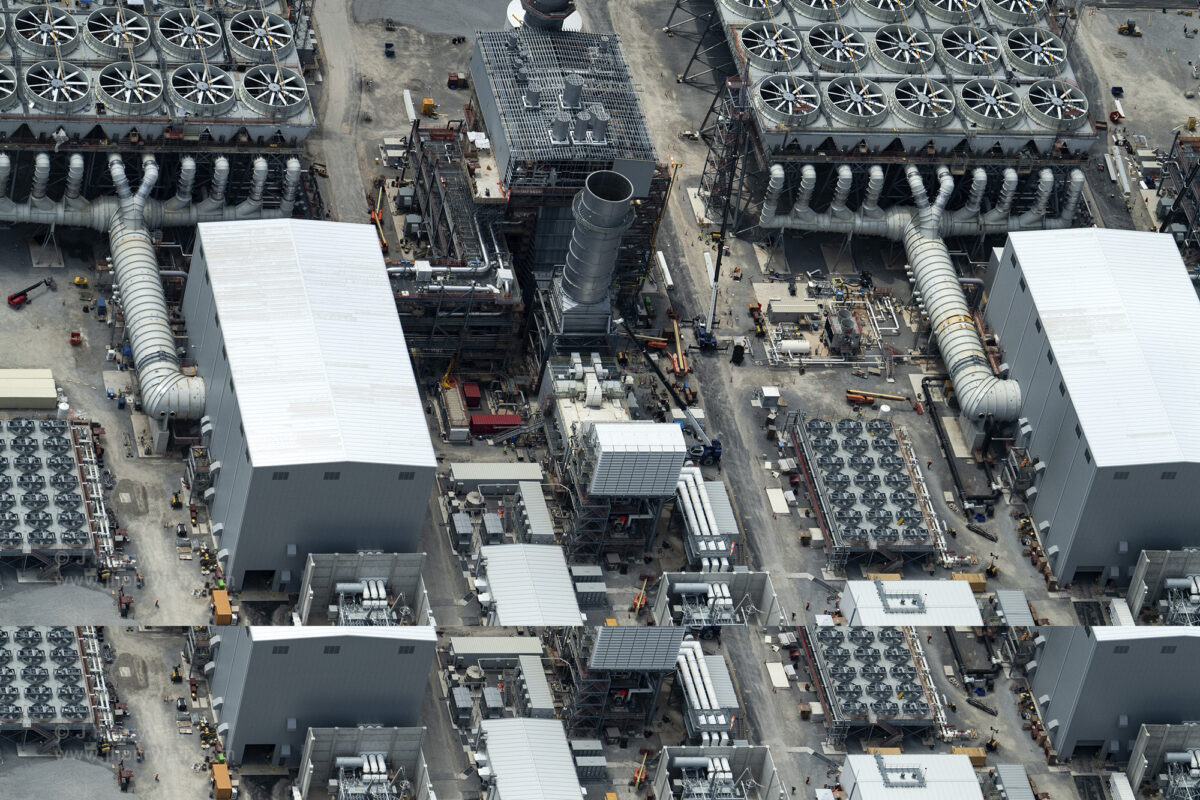
Gas power plant in construction on site of existing coal plant Cumberland City, Tennessee. The existing coal-fired power plant on this site is one of the most polluting in America, and has contaminated local groundwater with arsenic and selenium. The addition of another generating station burning fossil fuels will exacerbate the pollution problem. Flight thanks to Southwings https://www.southwings.org
Thus came the technology of compressing gas into LNG (liquid natural gas) and shipping it on specialized ships, a complex and dangerous supply chain with its own environmental impacts.
Soon, export terminals appeared at every available port near the sources of hydro-fracking extraction.
This purported “bridge fuel” to wean the world from hydrocarbon dependence seemed in fact to lead to deeper addiction.
And then there was the problem of Europe’s dependence on abundant, cheap Russian natural gas. The new Nordstream 2 Pipeline had to be destroyed.
The domestic natural gas surplus, combined with investor pressure for returns and the (pre-Trump) phaseout of coal, made conditions ripe for a boom in gas consumption.
And then came the AI and data center fever.
With these ravenous demands for power, we are in the midst of a rush to install more generation capacity, leading to an “all of the above” scenario.
Defunct nuclear plants are being restarted, long-obsolete coal plants slated for retirement are kept in service, and, of course, natural gas pipelines and power plants are being installed and proposed wherever they can be placed, despite local opposition.
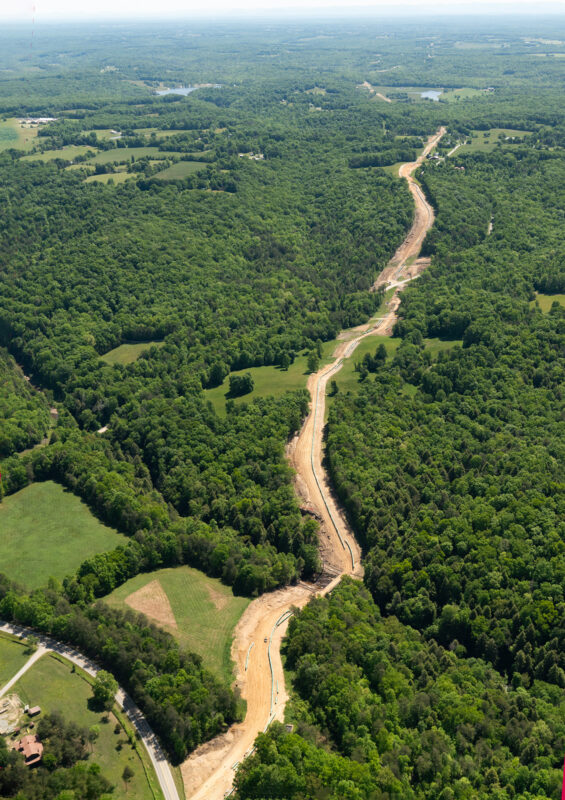
Pipeline path through countryside Kingston, Tennessee. Flight thanks to Southwings www.southwings.org
Not far behind are the secret data center deals, also over residents’ objections.
There is a fascinating hopscotch: data centers are proposed and then opposed in communities, then moved to the next, while natural gas-fired power plants and pipelines are constructed in the wake or in the lead.
These are massive, complex, and capital-intensive projects.
Once these investments are made, they will be monetized, locking us into hydrocarbon use for decades.