A hip-hop artist. An old-time fiddler. A metal guitarist. A first-time songwriter. Why would they all end up recording with the same producer?

At first glance, it makes no sense.
But at a small studio in North River Mills, West Virginia, it’s just another week.
The answer has less to do with the music than with the man behind the console.
Ben Townsend has a knack for helping people recognize possibilities in themselves.
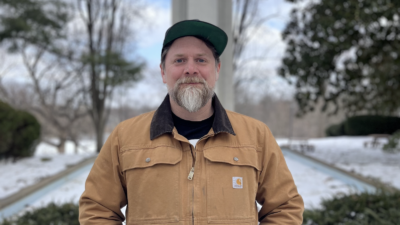
Most people know Townsend Townsend as one of Appalachia’s finest traditional musicians.
But that reputation tells only part of the story.
Growing up in rural West Virginia, teenage Townsend wanted something beyond the surrounding culture. Punk rock, underground music, and the wider world held far more appeal than the fiddles and front porches of his home.
“I sincerely rejected our tradition,” he says. “I wanted to be not from here.”
But Townsend had a girlfriend who kept dragging him to places he did not want to be.
“I had a girlfriend that played fiddle,” Townsend recalled. “She wanted me to go out and visit these old musicians, and I was just like, ‘Do you not see that I’m playing this electric guitar?'”
Another persistent tug came from a weasel teaching ag class at the county’s only high school. Townsend laughs when describing Paul Roomsburg. “They call him the weasel because he has this way of making you do what’s in your best interest and making you think it’s your idea.”
“If it weren’t for Mr. Roomsburg, I wouldn’t be doing any of this.”
The weasel placed a banjo in Townsend’s hands and invited him to a monthly gathering outside Romney. Townsend kept coming back to that cabin jam.
Check out Ben Townsend’s work recording project, 10 Hoedowns. It is a collaboration between Old-Time Tiki Parlour and Questionable Records and is available now. His music and production work are available through Questionable Records.
Soon after, Townsend became friends with Pastor Roy Knight.
Pastor Knight had served as a missionary and completed a doctorate in Appalachian Religious Traditions. He approached faith unexpectedly. Knight didn’t ask Townsend to stop asking questions. He introduced him to a faith that welcomed them.
“That really changed my relationship with the community… his explanation of the Christian mystical tradition… gave me a theology that I could use.”
Later Townsend explained, “My walk of faith includes questioning and challenging. I will knock it down to try to figure it out.”
College took Townsend to Shepherd University in Shepherdstown, West Virginia, where punk, old-time music, and endless curiosity found the perfect home.
The town attracted artists, musicians, writers, and people who cared more about making something interesting than fitting into a genre. Townsend and close friend Matt Metz formed a math-metal band called The Red Oranges.
“There was a really good music and art scene in Shepherdstown at the time,” Townsend recalled. “People would come over to my grandparents’ house, where I lived at the time in Martinsburg, and party all night after the math-metal shows. We’d put away our metal gear and then take out the acoustic instruments and play the rest of the night.”
Nobody set out to invent a sound. They were just playing everything they loved. The Fox Hunt band grew out of those nights.
“It’s never that I’m intentionally challenging anything,” Townsend later reflected. “I’m just fusing all the things that I have heard and loved.”
The Fox Hunt released albums, crossed the Atlantic, and built a devoted following before its members eventually went their separate ways.
Townsend’s post-Fox Hunt path led him to more unlikely musical conversations.
Through Found Sound Nation, a New York-based nonprofit that facilitates understanding and positive change through collaborative music-making, he joined musicians from Morocco, Indonesia, Turkey, South Africa, Palestine, and across the United States in a project built around cultural exchange.
He introduced collaborators to the old musicians who had shaped him. They introduced him to the traditions that had influenced them. Although the pandemic ended the project before a planned recording in Africa, it reinforced something Townsend already suspected: traditions grow stronger through conversation, not isolation.
That same philosophy now shapes his work in West Virginia’s North River Mills, a historic unincorporated community in Hampshire County.
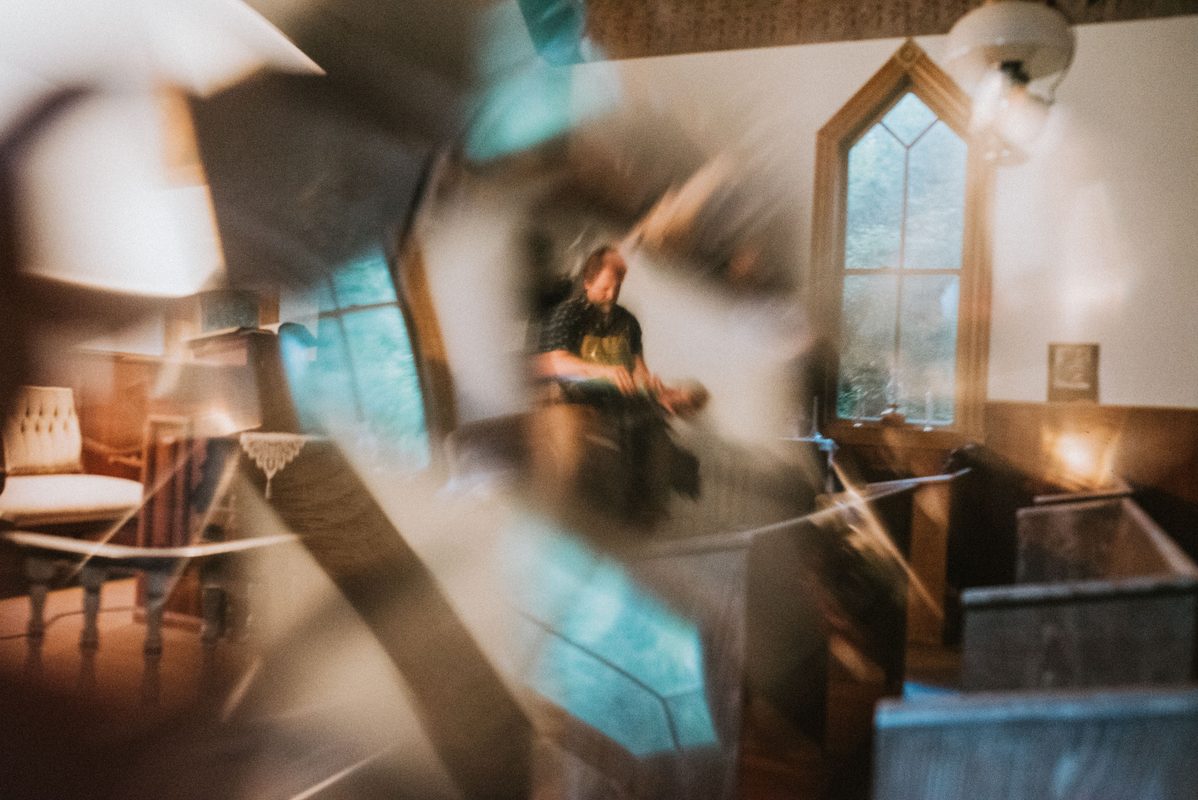
Townsend built a recording studio where artists are encouraged to follow unexpected ideas. Rather than steering artists toward a particular sound, he helps them discover their own.
“I think it’s the thing I love to do the most,” he said. “I just love to be plugged into a community and helping people realize things they can do.”
As Townsend’s music found new outlets, so did his faith. Pastor Roy Knight had planted the seed years earlier. During college, Townsend returned to those conversations.
“I was always taking comparative religion courses in college, and reading things, and interested, and he had always encouraged me to preach from the get-go.”
The questions never went away. Many of the old-time musicians Townsend admired had also preached or served in their churches. When the pandemic brought the world to a halt, it gave him the time to explore those questions more deeply. Following the example of many of his musical mentors, he enrolled in seminary.
“It’s changed me from someone who used to need to know the answer,” he reflected, “to someone who is really just trying to listen and facilitate and serve.”
That shift formed what Townsend now calls Third Space. Twice each month, people gather around a passage from the Common Lectionary. Guided by Townsend, they spend about an hour in conversation, then make music together. Not a concert. Not a performance.
Participation.
Townsend wants people who have never considered themselves musicians to discover that they already have something worth contributing.
“I’m trying to develop scores that even non-musicians will feel comfortable interacting with and exploring how we can redefine ministry to make it accessible to all people.”
The same impulse shapes Townsend’s newest music. His latest musical project takes ten traditional Appalachian fiddle tunes and runs them through synthesizers, electronic textures, and dance rhythms.
It should not work.
Yet it does.
For Townsend, it isn’t a contradiction. It’s the same conversation he’s been having his entire life.
Today, musicians still arrive at Townsend’s studio carrying unfinished songs and half-formed ideas. Others come to Third Space convinced they aren’t musicians at all. He meets both groups with curiosity instead of certainty and participation instead of performance.
“We are each other’s audience,” Townsend says.
Perhaps that’s why so many people keep finding their way to North River Mills.
Townsend isn’t asking them to become old-time musicians, or producers, or pastors.
Like his mentors before, he’s creating a place where they can recognize possibilities that were there all along.