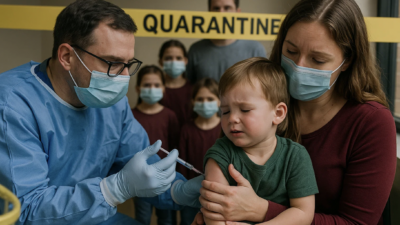
A significant measles outbreak has prompted health officials in South Carolina to quarantine at least 254 people, including numerous children, as the state grapples with rising cases attributed to low vaccination rates and recent holiday travel.

Since the outbreak began in early October, South Carolina has reported 111 confirmed measles cases, according to the South Carolina Department of Public Health (DPH).
State epidemiologist Linda Bell revealed during a recent news briefing that 105 of these cases involved unvaccinated individuals. Among the remaining cases, three patients had received just one of the two recommended doses of the MMR vaccine, while vaccination status for two others remains unknown.
In light of the outbreak, authorities have placed 254 individuals under quarantine, including 16 in strict isolation. “This significant jump in cases is unfortunate,” Bell remarked, emphasizing that vaccination is essential for protecting communities from the disruptions caused by measles in education and employment.
The DPH traced 16 infections back to the Way of Truth Church in Spartanburg County, a region experiencing a significant surge in cases. Since December 5, 27 new cases have been reported, raising the annual total to 114.
Once declared eradicated in the United States in 2000, measles has shown a concerning resurgence as vaccination rates decline.
Previous outbreaks in other states, including a tragic incident this year in Texas resulting in the deaths of two children, underscore the urgency of the situation. Approximately 94% of cases reported in Texas were among unvaccinated populations.
Health officials stress the importance of timely vaccination, highlighting that an MMR vaccine administered within 72 hours of exposure can prevent infection.
Understanding measles
Measles is a highly contagious viral infection that primarily affects children. It spreads through contact with respiratory secretions from infected individuals. It can linger in the air or on surfaces for up to 2 hours, making it crucial for communities to maintain high vaccination coverage to prevent outbreaks.
Symptoms generally develop 7 to 14 days after exposure and include a high fever, cough, runny nose, and watery eyes, followed by a distinctive reddish-brown rash. Other indicators may include Koplik spots in the mouth, loss of appetite, and diarrhea.
As South Carolina copes with this outbreak, health authorities are reaffirming the critical role of vaccinations in safeguarding public health and encouraging communities to protect themselves against preventable diseases.