As Pennsylvania voters prepare for the November gubernatorial election, a key issue divides the major candidates: the legalization of adult-use recreational marijuana.

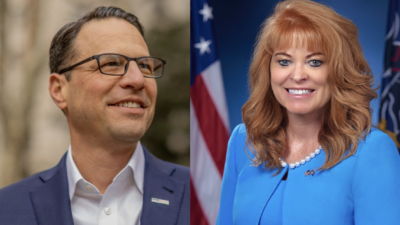
While Democratic Gov. Josh Shapiro has consistently advocated for a state-run recreational marijuana program, Republican challenger Stacy Garrity stands firmly opposed, promising to veto any such legislation.
Shapiro, who has been in office since 2023, has included the creation of a recreational marijuana program in each of his yearly budget proposals.
His plan envisions the program being managed by the state Department of Agriculture, with tax revenues directed toward healthcare and education.
Shapiro’s administration estimates that full legalization could generate approximately $729 million in its first year from taxes and licensing fees, with an annual revenue of $200 million thereafter, Spotlight PA reports.
His proposal includes a 26% tax on recreational marijuana sales, with $25 million earmarked to support minority-owned businesses entering the cannabis market.
In stark contrast, Garrity, who currently serves as Pennsylvania’s state treasurer, argues that marijuana should remain illegal for recreational use.
She cites concerns over public health and safety, particularly among young users, and describes Shapiro’s tax proposal as a desperate measure to address the state’s budget deficit.
Beyond the debate on recreational use, Pennsylvania’s medical marijuana program faces its own challenges.
The program, which serves over 430,000 patients, has seen $9.1 billion in sales since it started in 2018, but is marred by regulatory inconsistencies and transparency issues, according to Garrity.
She calls for stricter regulation to prevent abuse, although specific changes remain unspecified.
The state’s handling of cannabis-related criminal justice issues also remains a contentious topic.
Shapiro has advocated for expunging the records of nonviolent offenders convicted of minor marijuana possession, a stance that garners significant support among Democrats.
Despite this, nearly 10,000 arrests for marijuana possession occurred in 2025, highlighting ongoing enforcement challenges.
The proliferation of intoxicating hemp-derived products, such as edibles and smokeables, further complicates the state’s cannabis landscape. These products, which occupy a legal gray area, have prompted calls for stricter regulations to protect consumers, particularly minors.
Meanwhile, additional efforts to advance cannabis policy reform in Pennsylvania have faced significant hurdles.
Democratic State Senator Sharif Street, along with Republican Senator Dan Laughlin, has championed a bipartisan bill to legalize recreational marijuana.
However, the proposal remains stalled in committee, prompting a discharge resolution to force a vote on the Senate floor, according to Marijuana Moment.
Despite broad public support, with polls indicating that three out of four voters favor legalization, political maneuvering and a Republican-controlled Senate pose significant obstacles.
The debate over marijuana legalization in Pennsylvania underscores broader national trends, as more states move toward legalization despite federal inaction.
As the election approaches, the outcome will likely hinge on candidates’ positions on cannabis policy, reflecting voters’ growing demand for reform and the potential economic benefits of legalization.