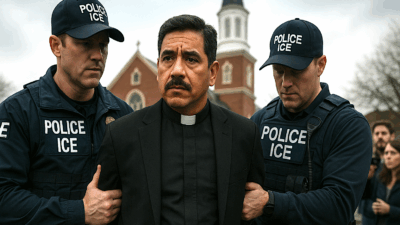
U.S. Immigration and Customs Enforcement agents arrested Pastor Daniel Omar Fuentes Espinal on July 21 as he ran errands in Easton, Maryland, the pastor’s family and local advocates confirmed.

The Honduran-born minister, who has served the Nazareno Jesús Te Ama Church for a decade and is the primary provider for his wife and three children, was apprehended following a routine visit to a home-improvement store.
Fuentes Espinal, 46, was taken first to a detention facility in Salisbury and then transported to the Baltimore ICE Detention Center.
His arrest, occurring despite the absence of any criminal convictions, sent shockwaves through the tight-knit Latino community on Maryland’s Eastern Shore.
The pastor’s daughter, Clarissa Fuentes Diaz, recounted how her father, a respected spiritual leader, was picked up shortly after buying materials at Lowe’s and grabbed a quick breakfast.
She described the event as sudden, unexpected, and profoundly destabilizing for a family that has long navigated the immigration system through prayer and patience.
Community advocates say the arrest is emblematic of a broader uptick in enforcement actions under the current administration.
According to the Deportation Data Project, immigration detentions in Maryland have more than doubled since President Biden’s second term began, with over 600 people arrested despite having no criminal history.
Matthew Peters of the Chesapeake Multicultural Resource Center warned that the pastor’s detention reflects a disturbing trend.
“This is nothing new for this community … Everyone who is taken causes an impact,” he told The Talbot Spy.
Faith leaders and families alike are scrambling to secure legal counsel and power of attorney in case of similar detentions.
Pastor Fuentes Espinal’s case draws fresh scrutiny to ICE criteria and the vulnerability of longtime undocumented residents whose lives are entrenched in local institutions.
Friends and congregation members have submitted more than a dozen character affidavits on his behalf, emphasizing his civic involvement, including offering solace at funerals and supporting his neighbors in times of hardship.
Legal experts note that arrests like this may conflict with community policing efforts aimed at fostering trust.
Critics say they threaten to erode public confidence in police, courts, and local social services when civic participation becomes a liability.
ICE has not publicly released the reasons behind Fuentes Espinal’s detention.
The pastor’s family has secured pro bono legal representation and filed a request for bond.
Pending that hearing, they are preparing for the possibility of transfer to a remote ICE detention facility, which could sever access to his legal team and congregation.
In Easton, parishioners now plan vigil prayers and community support initiatives to ensure the pastor’s family remains connected.
As Pastor Fuentes Espinal waits for his next immigration hearing, local churches, immigrant rights groups, and legal advocates are coalescing around a message: Community pillars should not be collateral damage in broader immigration crackdowns.