The federal government has yet to release information on when — or whether — it will continue to provide COVID-19 vaccines to low-income children through a free immunization program, raising alarms among some Tennessee health providers ahead of this Fall’s respiratory illness season.

The Centers for Disease Control and Prevention’s Vaccines for Children program routinely delivers immunizations to state and local health officials to be made available to children at public health clinics in all 95 Tennessee counties and other federally-subsidized urban and rural clinics across the state.
About half of all Tennessee kids — and 50% of children nationwide — rely on the program for all or most of their vaccines, including COVID-19.
The U.S. Food and Drug Administration approved 2026-2027 COVID vaccines in August, and they are currently available to those with commercial insurance.
But a statement released late last week by the U.S. Department of Health and Human Services has introduced confusion and uncertainty about the federal government’s plans to get the vaccine to low income children this year.
“HHS and CDC have a responsibility to ensure responsible stewardship of taxpayer resources and that vaccines procured through federally funded programs are appropriate for the populations those programs serve,” read the statement, which was also shared on Monday with the Tennessee Lookout in response to questions posed to HHS about the government’s plans to make the COVID vaccine available to low-income children.
The CDC is “finalizing decisions regarding COVID-19 vaccine procurement” for the children’s program, as well as a separate program that provides vaccinations to low income adults, the statement said. “Additional information will be available soon,” the statement said.
Brian Haile, CEO of Neighborhood Health Centers, called the uncertainty and delay over COVID vaccine availability for children “deeply, deeply distressing.”
Neighborhood Health Centers provide medical care to adults and children regardless of income or insurance. Last week its clinics began offering flu vaccines. Ideally, Haile said, COVID shots would be provided at the same time, sparing busy families a second trip to a clinic.
Offering seasonal vaccines, beginning in September and through November, provides “maximum protection for folks before the holiday season begins and they start spending more time indoors in close proximity to others, especially others that they might not see on a routine basis,” he said.
“This is a big deal,” Haile said. “We are worried we’re going to have much lower COVID vaccination rates than we could otherwise achieve if the federal government had simply taken timely action.”
Neighborhood Health is currently referring patients with insurance to local pharmacies, where COVID shots are free to those with coverage. “Neighborhood Health hopes to be able to provide COVID vaccinations to children and pregnant women later this year,” a flier for patients said.
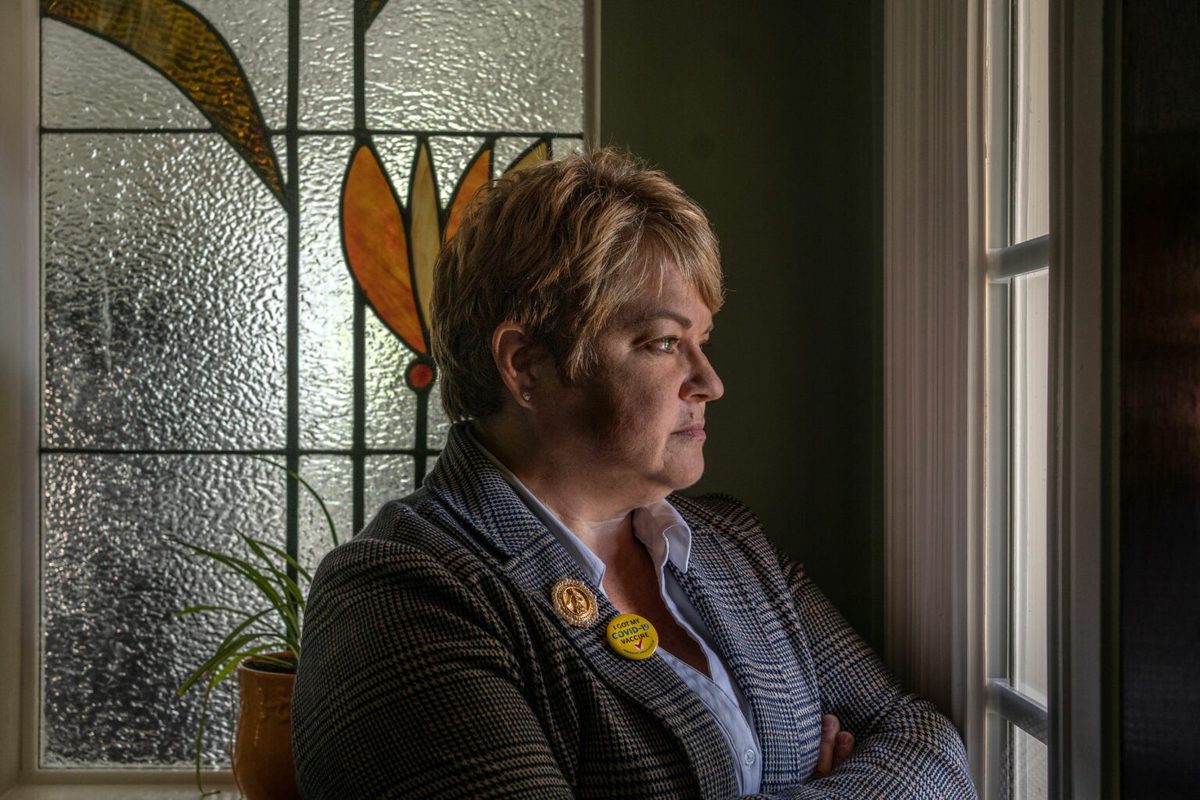
“What we’re seeing this year is unusual,” said Dr. Michele Fiscus, chief medical officer for the Association of Immunization Managers, about uncertainty surrounding a COVID-19 vaccine program for low-income children. (Photo: John Partipilo/Tennessee Lookout)
Children also routinely get free COVID shots in public health clinics operated by the Tennessee Department of Health that are paid for by the federal Vaccines for Children program. The department did not respond Monday to questions about the impact of federal uncertainty or delay in offering the vaccines or provide its current advice to parents and caregivers seeking the vaccine for children.
It is not unusual for there to be a delay between when seasonal vaccines become available on the commercial market versus when they are made available through the Vaccines for Children program, said Dr. Michele Fiscus, chief medical officer for the Association of Immunization Managers, a membership organization for state and local public health vaccine programs. Fiscus was formerly medical director for Tennessee’s Vaccine Preventable Diseases and Immunization Program.
That lag in approved coverage of vaccines between kids with insurance and those without has long been a source of frustration for pediatric providers, she said.
“You never want to have to tell a child that they can’t be protected against a disease because of their insurance status, and so that never feels good. And from an ethical and equity perspective, it is not ideal to have there be a gap in the availability,” Fiscus said.
But, she said, “what we’re seeing this year is unusual.”
“What’s happening this year is the anxiety around when the vaccines will become available just because of the environment that we’re all living in right now,’ she said.
Fiscus said her advice to parents is to “get their children vaccinated as soon as the vaccines become available.”
Editor’s note: Tennessee Lookout Editor J. Holly McCall serves on the board of directors for Neighborhood Health.