July marks National Minority Mental Health Awareness Month, a time to spotlight the distinct mental health challenges confronting historically marginalized communities across the United States.

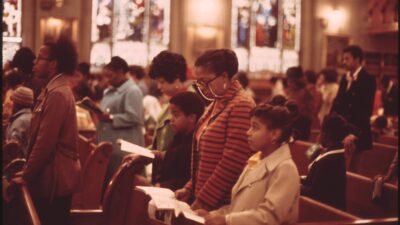
From Pittsburgh to Oakland and everywhere in between, the churches in Black communities across America have long offered sanctuary, social solidarity and spiritual guidance.
Today, they are increasingly stepping into public mental health efforts, marrying pastoral care with tested behavioral strategies to address longstanding stigma and access gaps.
This shift comes against stark odds.
Black Americans are approximately 20% more likely than white counterparts to experience serious mental health conditions, yet far less likely to receive treatment, often due to shame, distrust of the medical system, and a lack of culturally competent providers.
First recognized in 2008, the observance aims to raise awareness of how race, ethnicity, and cultural background can shape access to — and experiences within — the nation’s mental health care system.
From systemic inequities in diagnosis and treatment to stigma rooted in cultural norms, experts say the barriers to care for communities of color remain persistent and complex.
A growing number of Black pastors are being trained to incorporate evidence-based tools like cognitive behavioral therapy (CBT) into sermons and pastoral counseling, while partnering with psychologists to offer referrals and organized support.
One initiative, called the CHURCH Project, equips clergy in Pittsburgh-area congregations to use spiritually framed CBT techniques, drawing on biblical language and gospel music to support mental wellness within faith traditions.
In many faith communities, depression and anxiety were once dismissed as moral shortcomings rather than treatable conditions, the American Foundation for Suicide Prevention (AFSP) has found.
For many Black people, the church remains the first or only venue to discuss emotional pain.
Clergy see more parishioners for mental health concerns annually than psychiatrists or psychologists combined. Leaders capable of recognizing crisis and providing both spiritual support and referral can become crucial bridges to clinical care.
Faith-based therapy models are also emerging. The Solihten Institute, for example, offers counselors trained in both theology and clinical disciplines. Their approach blends inward reflection and clinical techniques under a spiritually sensitive framework.
Grassroots programs such as “PsychoHairapy” train hairstylists and barbers, often hubs of the Black community, to offer guided mental wellness conversations while clients are in their chairs, often moving the needle on stigma through everyday interaction.
Black-led healing initiatives are partnering faith and therapeutic networks.
The Black Emotional and Mental Health Collective (BEAM), founded by Yolo Akili Robinson, deliberately blends therapy, artistic expression, activism and clergy engagement to build holistic outreach into Black communities. BEAM workshops elevate emotional literacy while honoring cultural identity and resilience from within the community itself.
Clergy engagement has been fundamental to the success of community-based programs like AMEN (African American MENtal Health), which embeds trusted Black faith leaders and lay counselors in churches to deliver wellness curricula, lectures, and peer support, particularly for men.
Such public engagement, built on preexisting trust networks, has enhanced local mental health literacy while overcoming stigma, according to PubMed, which compiles more than 38 million citations for biomedical literature from MEDLINE, life science journals and online books.
Still, the path is not without challenges.
Many church leaders report high demand but little training in managing clinical cases. Some reject dialogue about mental illness entirely, equating it with weakness. Critics warn against over-reliance on pastoral instruction at the expense of professional intervention, a gap that faith-based therapy frameworks aim to address.
Public health experts argue the solution is nuanced, stressing that faith networks don’t need to replace clinical care, because they can serve as an entry point. People are more likely to consider therapy when mental health becomes part of Sunday messaging, referrals are faith-aligned, and spiritual values are acknowledged in the clinical journey.
Encouragingly, new tools are helping faith-based providers make the mental health bridge.
The ChurchConnect app, developed with Boston-area Black congregations, offers guided meditations, screening tools and support referrals via a digital companion.
Built with community input, it frames therapy in context of shared church culture and spiritual relevance. .
Efforts are also underway in Maryland, where psychiatrists like Dr. Danielle Hairston have led outreach to faith communities to address trauma, systemic racism and wellness from within culturally trusted contexts