A peer-reviewed study released this week estimates that two Baltimore-area incinerators are imposing nearly $100 million in annual health-related costs on residents.

The data is now reigniting longstanding concerns over environmental justice, public health, and urban policy in communities burdened by toxic emissions.
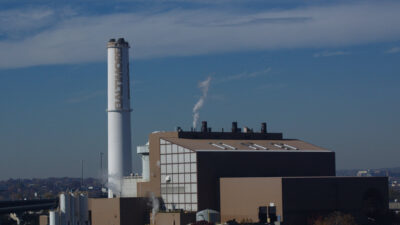
Researchers analyzed emissions from the Wheelabrator (formerly BRESCO) municipal waste plant and the Curtis Bay medical waste incinerator.
Wheelabrator is tied to roughly $53.8 million in yearly health damages. In comparison, Curtis Bay contributes about $36.9 million, bringing the combined tally close to $91 million in costs tied to asthma, heart disease, and premature mortality.
Lead author Kevin Tu emphasizes that the human toll is concentrated in historically marginalized South Baltimore neighborhoods disproportionately impacted by decades of industrial activity.
These areas, often characterized by elevated poverty and limited health access, now face severe environmental burdens that externalize costs across broader corridors, WYPR reports.
The Johns Hopkins–style methodology echoes earlier findings from a 2017 Chesapeake Bay Foundation study estimating $55 million in healthcare losses solely from Wheelabrator emissions.
That report likened long‑term exposure near the incinerator to the same cancer risk as secondhand cigarette smoke, with an estimated 5.5 deaths annually in Maryland attributable to particulate matter from the facility.
Air pollutants such as nitrogen oxides, sulfur dioxide, fine particulates, and heavy metals like lead and mercury penetrate the lungs and bloodstream, exacerbating asthma, cardiovascular disease, neurological disorders, and cancer risk.
Baltimore’s incinerators emit some of the most dangerous toxins regulated by the EPA, often in neighborhoods already grappling with high asthma rates and limited health infrastructure.
In May 2024, the South Baltimore Community Land Trust, along with environmental groups, filed a Title VI civil rights complaint with the EPA.
The grievance argues that Baltimore’s 10-year solid waste plan fails to address the steady reliance on incineration and disproportionately burdens predominantly Black and low-income neighborhoods east and south of downtown.
That complaint prompted the EPA to launch an investigation into whether the city’s continued incinerator dependence violates federal civil rights standards.
Baltimore officials have defended the plan’s inclusion of recycling and composting goals, but stopped short of firm timelines to phase out incineration fueled by private waste contracts.
Environmental advocates assert that incremental emission reductions are insufficient.
They press for an end to state subsidies, which have forked out nearly $10 million over six years to operators, classifying burning trash as renewable energy, and call for municipal transition to zero waste models prioritizing composting and recycling.
Homes and schools within a three-mile radius of Wheelabrator formed a community where half the population lives below the poverty line and 66 percent identify as non-white.
Community groups argue this is emblematic of the environmental racism underpinning Baltimore’s industrial landscape.
Two incinerator permits are set to expire in 2027 (Wheelabrator) and 2031 (Curtis Bay Energy), potentially creating a window for policy action.
State and local officials have signaled interest in tightening emissions rules and phasing out the plants, though actual steps remain unclear.
Persistent political friction, legal battles, and public pressure will determine whether Baltimore can pivot from its waste‑burning past toward healthier futures.
Why This Matters
- Public Health Impact: The pollution burden translates to higher healthcare costs, lost wages, and increased mortality, primarily in industrial-adjacent neighborhoods already suffering from chronic disease rates.
- Environmental Justice: Historically marginalized South Baltimore areas disproportionately bear the health burdens of incinerator emissions.
- Policy at a Crossroads: Future permit renewals and EPA scrutiny may be pivotal moments in determining whether Baltimore phases out incineration or doubles down on outdated infrastructure.