While Americans increasingly report anxiety and distrust along political lines, a grassroots movement is taking an unconventional approach to easing tensions: whitewater rafting.

RAFT (Reuniting America by Fostering Trust), an initiative of Team Democracy, spent the past year recruiting people from sharply different backgrounds to team up on rivers across the country.
Organizers say the program pairs the physical demands of navigating rapids with guided conversations about family, community, and national issues — and that the combination produces surprising agreement and genuine human connection.
Participants are encouraged to engage in difficult conversations while also learning basic rafting skills: how to synchronize paddling, read currents, and avoid hazards.
Ken Powley, founder of Team Democracy, emphasized the emotional and strategic moments common to both river teams and civic work.
“On a river, there’s a moment when everything shifts. You round a bend, and the water starts to gather itself. The current tightens, the sound deepens, and suddenly the boat feels lighter and faster,” Powley said.
“You may not know every turn ahead, but you move forward by trusting your skills, your partners, and the purpose that brought you onto the river in the first place.”
[Also read Ken Powley’s column for Postindustrial: Voices:Narrowing America’s divide with raging white water]
Powley — reflecting on Team Democracy’s recent activities — described the organization’s expanding portfolio. Over the last five years, Powley said, the group has applied experience in technology, systems design, and crisis navigation to strengthen civic institutions.
“As 2025 drew to a close, our team reflected at length about the ways our impact and our organization have grown over the last 12 months,” Powley said. He characterized 2026 as a “breakout phase,” crediting partnerships and donors for enabling new opportunities to scale their trust-building programs.
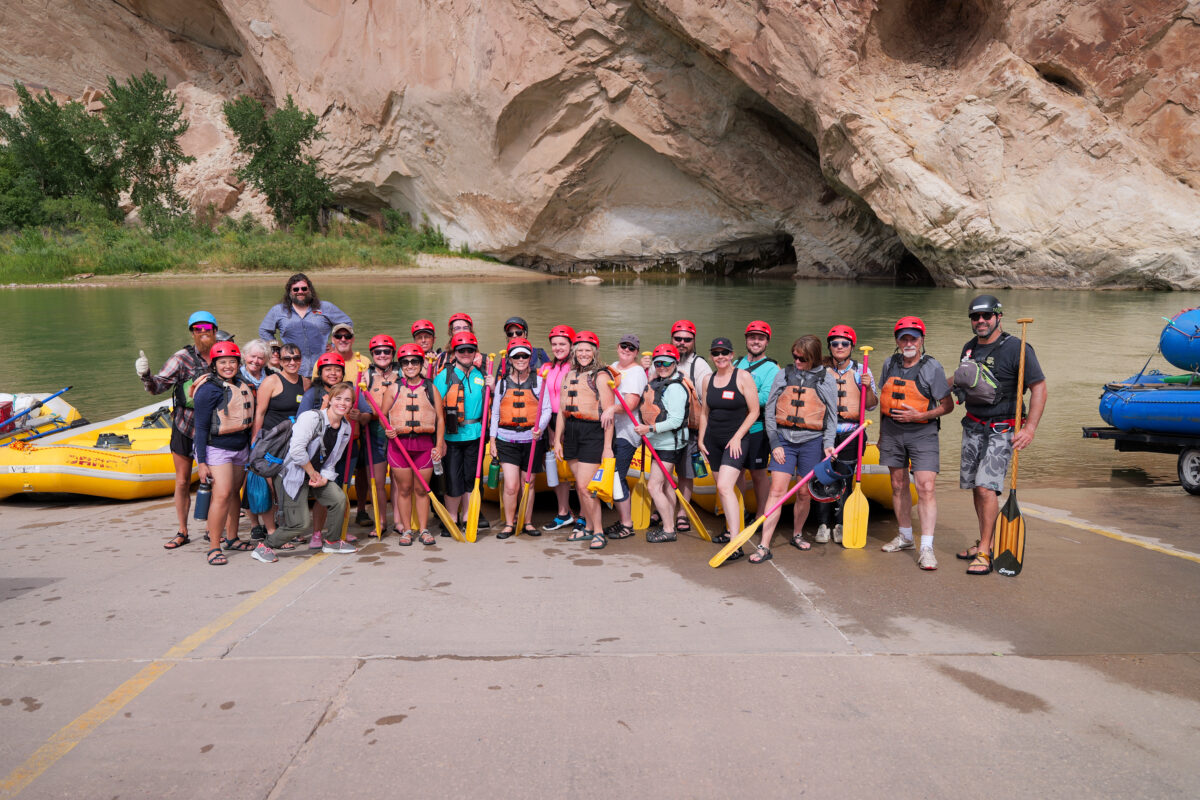
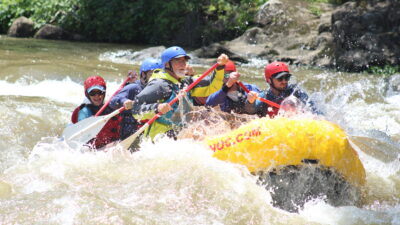
Team Democracy take RAFT for America to the Green River in Vernal, Utah to talk with locals about immigration policy in America.
Participants interviewed after rafting sessions reported shifts in tone and perspective. Several said that the shared physical challenge created a basis for respectful dialogue that would have been difficult to achieve in a purely conversational setting.
Organizers point to those anecdotal outcomes as evidence that deliberate, structured encounters between people from different life experiences can reduce the heat of partisan disagreement.
As Team Democracy moves to expand RAFT activities in 2026, the question remains whether programs like RAFT for America can scale their impact beyond measured encounters on the river and contribute to broader reductions in civic polarization.
Organizers say early results and growing interest give them reason for cautious optimism.