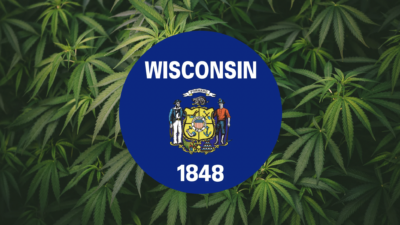
Wisconsin’s political landscape has shifted dramatically following this week’s elections, positioning the state to legalize marijuana potentially.

With Democratic leaders now holding majority control in both the Assembly and Senate, alongside the election of pro-legalization Gov.-elect David Crowley, advocates are optimistic about the prospects for cannabis legislation.
Assembly minority leader Democratic Rep. Greta Neubauer, expected to become the new speaker, emphasized the popularity of marijuana legalization among Wisconsin voters.
“We know that legalization of marijuana is very popular in the state of Wisconsin, and we intend to listen to the voters of Wisconsin and legalize marijuana in the coming year to two years,” Neubauer stated, according to Marijuana Moment.
Democrats are eyeing the financial benefits of legal cannabis sales, with plans to channel tax revenue into education and healthcare initiatives. “We do hope to raise some revenues from marijuana legalization,” Neubauer told WKOW-TV, highlighting the potential for significant funding to support essential services.
Outgoing Democratic Gov. Tony Evers and Democratic legislative leaders have long advocated for legalizing marijuana, both for recreational and medical use, but were consistently hindered by Republican majorities in the legislature.
Now, with the new Democratic majority, Sen. Mark Spreitzer, chair of the Democratic Caucus, expressed optimism about advancing legalization efforts. “I think we’re going to be able to get it done,” he said.
Democratic State Sen. Chris Larson emphasized the economic necessity of legalization, noting the impact of neighboring states with legal marijuana. “
Representing a border community where we have Illinois with multiple dispensaries just a couple of miles from my house in Beloit, we’re seeing our tax dollars go across the border,” Larson remarked.
He cautioned that Wisconsin’s current prohibition stance is detrimental, stating, “most of the country has figured it out, and we are just giving away $40 million across the border for bad policy.”
Larson also stressed the need for a regulatory framework that prioritizes local businesses and includes essential safety measures, such as proper labeling and age restrictions.
Governor-elect Crowley underscored the urgency of moving towards full legalization, highlighting the significant revenue opportunities it presents. He projected that legalization could generate between $80 million and $170 million, funds that could significantly enhance healthcare access across the state.
Crowley has previously articulated his vision for using cannabis tax revenue to support free pre-kindergarten education and expand healthcare access.
Despite previous setbacks, including a limited medical cannabis bill that failed to advance, Crowley remains committed to prioritizing cannabis reform. “If you can’t change minds, you have to change faces,” he asserted, promising to work closely with reform advocates.
As Wisconsin stands on the brink of a major policy shift, the upcoming legislative session could mark a turning point in the state’s approach to marijuana legalization, reflecting changing attitudes among citizens and lawmakers alike.