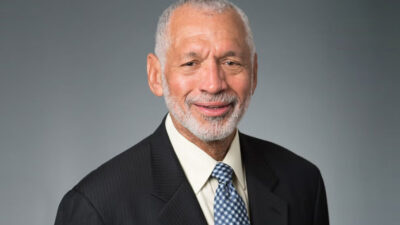
A retired Army general writes about the responsibility all Americans have to preserve and protect the Constitution, especially when our democracy is under fire.

I spent 34 years serving in the United States Marine Corps. I flew four missions into space as a NASA astronaut and later led the agency as its administrator. Throughout those experiences, one commitment remained constant: my oath to support and defend the Constitution of the United States.
That oath was not to a president, a political party, or an administration. It was to the Constitution and the principles that have sustained our republic for 250 years.
As Americans prepare to cast their ballots in the midterm elections, we must return to that commitment. Our republic depends on ensuring every eligible American can vote freely, without intimidation, obstruction, or interference.
The Principles for Trusted Elections establish the ground rules for fair, secure, and trustworthy elections, regardless of political differences. That is why I recently joined six fellow retired generals in calling on Americans to affirm these principles as a common foundation for our democracy.
But signing the Principles is only a starting point. Principles have meaning only when we defend them in practice.
I am deeply concerned that we are losing sight of that responsibility.
Too often, conversations about election integrity become consumed by speculation, partisan accusations, and unsubstantiated allegations of widespread fraud. Meanwhile, serious questions about voter access, election interference and constitutional rights receive far less attention.
In the military, we are taught that loyalty to the Constitution transcends personal allegiance. At NASA, success depends on rigorous preparation, respect for evidence, and confronting problems rather than ignoring them.
Our elections deserve that same seriousness of purpose.
Protecting election integrity means more than guarding against fraud. It means ensuring eligible voters can cast their ballots and have them counted accurately, opposing intimidation and unlawful interference, and holding public officials accountable when their actions threaten constitutional rights.
I recently visited North Carolina A&T State University in Greensboro, where students marched a mile and a half to vote after polling locations on their campus and at neighboring UNC Greensboro were removed for this election.
Their determination was inspiring. But why should exercising a fundamental democratic right require overcoming unnecessary obstacles?
Young Americans should be encouraged to participate, not discouraged by barriers that make voting more difficult. The same is true for older Americans, people with disabilities, rural voters, and every eligible citizen.
Americans hold different views about election laws, voting procedures, and the proper role of government. Those disagreements are legitimate. But certain constitutional obligations must come first.
The rule of law must apply equally. Election officials must work without intimidation or improper interference. Eligible voters must be able to participate. And election outcomes must reflect lawful votes, not the preferences of those in power.
We cannot claim to support trusted elections while overlooking credible threats to voter access or profess allegiance to the rule of law while excusing interference that benefits our preferred political outcome. Nor can we expect Americans to trust institutions that fail to earn that confidence.
For those of us who have worn the uniform, this responsibility carries particular significance. We swore to defend a constitutional system that protects the rights and freedoms of Americans whose beliefs may differ profoundly from our own.
That is what makes our constitutional republic worth defending.
The Principles for Trusted Elections remind us what should unite us, even in times of deep political division. I urge every American to affirm them.
More importantly, put them into practice.
I took an oath to defend the Constitution decades ago. That obligation endures long after military service ends.
But defending the Constitution is not a responsibility reserved for those who have worn the uniform. The students I met at North Carolina A&T, like generations of Americans who have stood up to defend and expand our rights, remind us that progress depends on people willing to act.
All Americans must stand up for the rule of law and defend every eligible American’s right to vote and have that vote count.
The future of our republic depends on us.