
Consistent population growth and a diversifying economy have turned one-time agricultural and manufacturing-centric Georgia into a model for other Postindustrial States still writing their next chapter.

Georgia’s economy is often associated with agriculture, manufacturing, and the global brands that have long defined Atlanta.
Peaches, peanuts, paper mills, and factories remain integral parts of the state’s identity.
Yet beneath that familiar image, Georgia has undergone a profound economic transformation over the past several decades, emerging as one of the nation’s leading examples of a postindustrial economy.
That transformation has not meant the disappearance of industry. Rather, it reflects a shift in where economic value is created.
How did Georgia reinvent its economy?
Today, technology, logistics, healthcare, higher education, financial services, and media production account for an increasing share of employment, investment, and economic growth. Manufacturing remains important, but it is increasingly complemented—and in some regions overshadowed—by industries built on information, innovation, and global connectivity.
Georgia’s Postindustrial Transformation has been reinforced by one of the nation’s strongest population growth trends.
Now home to more than 11 million residents, Georgia is the eighth most populous state and consistently ranks among the national leaders in total population growth. While several smaller states occasionally outpace Georgia in percentage growth, the state regularly adds hundreds of thousands of new residents through domestic migration, international immigration, and natural population increase.
This sustained influx of people has expanded the labor force, increased consumer demand, and attracted employers seeking access to both skilled workers and a rapidly growing market.
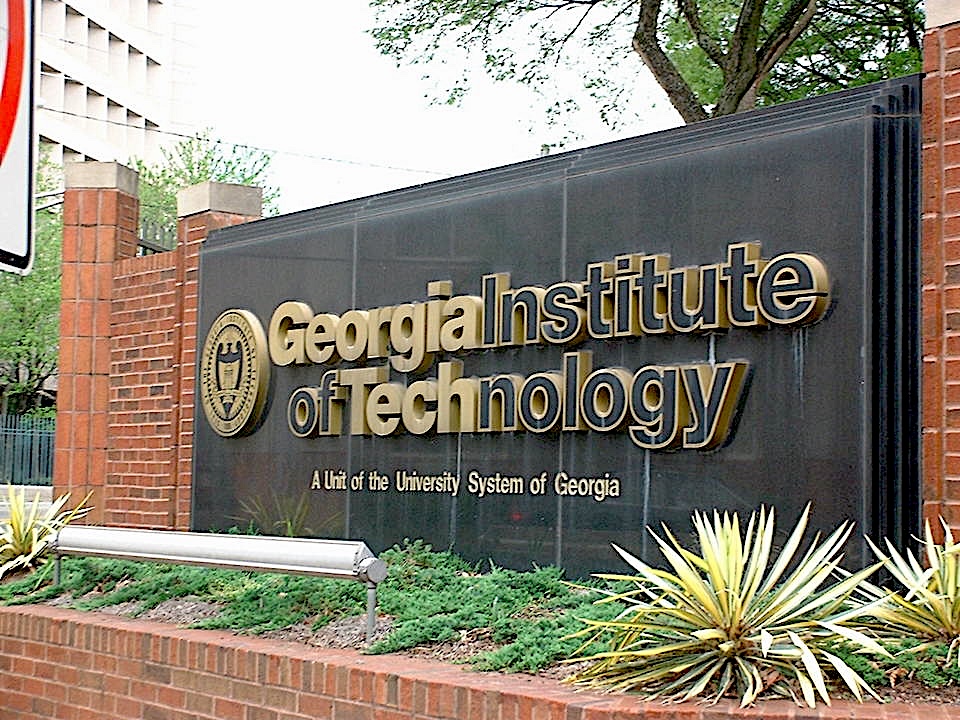
And at the center of it all is Atlanta
Atlanta sits at the center of this transition. The metropolitan area has evolved into one of the Southeast’s largest technology hubs, attracting software companies, cybersecurity firms, fintech startups, and venture capital.
The capital’s deep talent pool, anchored by institutions such as Georgia Tech and Emory University, has helped foster an innovation ecosystem that extends well beyond traditional manufacturing. Population growth has further strengthened this ecosystem by supplying employers with an expanding workforce and encouraging additional private investment.
The growth of financial technology has become particularly notable. Atlanta processes a significant share of the world’s electronic payments through companies specializing in payment processing, digital commerce, and financial software.
These businesses exemplify a hallmark of the postindustrial economy: value generated through intellectual property, software, and specialized services rather than the production of physical goods.
Georgia’s logistics sector also illustrates how Postindustrial Economies often rely on sophisticated service networks rather than factory floors alone.
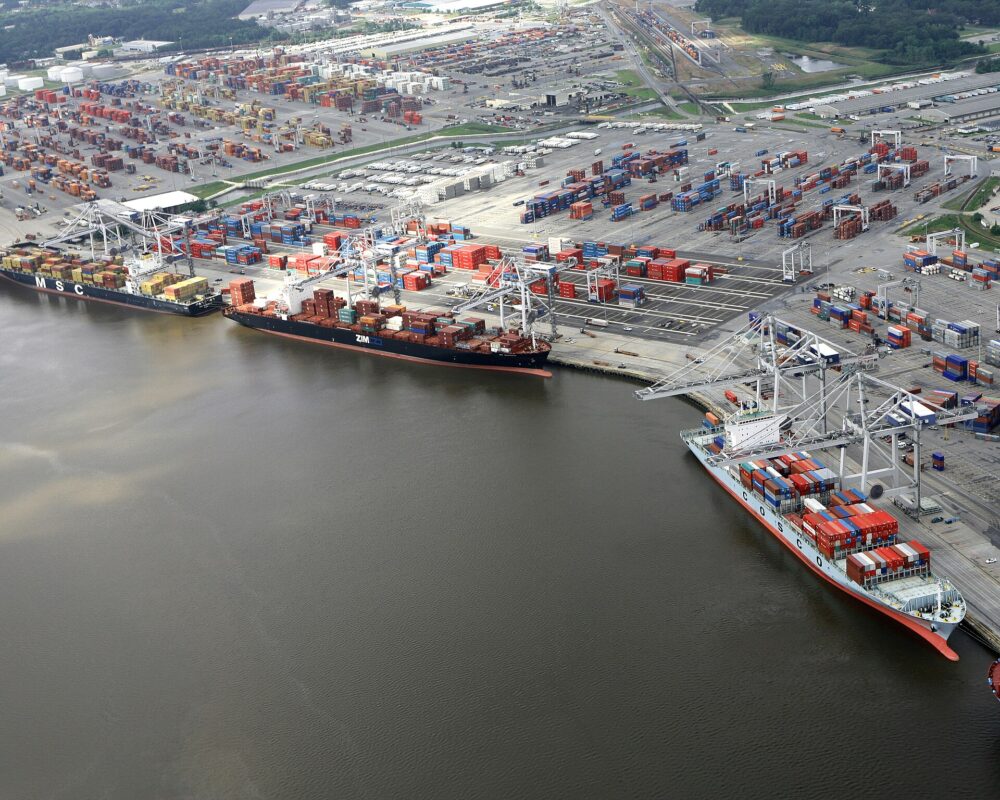
Image courtesy of the U.S. Army Corps of Engineers Savannah District
From Atlanta to the sea and beyond
The Port of Savannah has become one of North America’s busiest container ports. At the same time, Hartsfield-Jackson Atlanta International Airport remains one of the world’s busiest aviation hubs for both passengers and cargo.
Combined with an extensive network of interstate highways and freight rail, these assets have made Georgia a critical gateway for domestic and international commerce.
The state’s role is increasingly less about manufacturing every product that moves through its borders than about managing the efficient movement of those products.
Distribution centers, supply chain analytics, warehouse automation, and transportation management systems have become major sources of employment and investment. Rapid population growth has also fueled demand for warehouses, commercial development, housing, and transportation infrastructure, further reinforcing Georgia’s role as a national logistics hub.
Corporate headquarters further reinforce Georgia’s postindustrial character. Companies such as Coca-Cola, The Home Depot, Delta Air Lines, and UPS maintain substantial executive, financial, legal, technology, and marketing operations in Atlanta. These headquarters generate high-skilled employment focused on strategy, branding, data analysis, and corporate management—functions that increasingly drive profitability in the modern economy.

Stranger Things is just one of the many shows and movies shot in Atlanta and Georgia, including large portions of many Marvel movies. Image courtesy of Netflix.
Light, camera, economic reinvention!
Another symbol of Georgia’s economic evolution is its rapidly expanding film and television industry. Aggressive tax incentives have helped transform the state into one of the world’s busiest production centers for movies and television.
While cameras and sound stages are tangible assets, much of the industry’s economic value lies in creative labor, visual effects, digital editing, production management, and intellectual property.

And don’t forget your medicine
Healthcare and life sciences have similarly emerged as pillars of Georgia’s knowledge economy. Atlanta’s concentration of hospitals, medical research institutions, biotechnology companies, and public health organizations—including the headquarters of the Centers for Disease Control and Prevention—has created a diverse ecosystem built on scientific research, innovation, and specialized expertise.
Higher education also plays an increasingly important role in Georgia’s economic development strategy. Universities serve not only as centers of teaching but as engines of research, startup formation, workforce development, and technology commercialization. Their influence extends beyond campus boundaries, helping attract investment while supplying employers with highly educated workers.
Yet Georgia’s economic story is not simply one of replacement. Traditional industries continue to play an essential role. The state remains a national leader in poultry production and is a major producer of peanuts, cotton, blueberries, and pecans. Manufacturing remains strong in sectors including aerospace, automotive production, paper products, and food processing.
Indeed, one defining feature of Georgia’s economy is the coexistence of industrial and postindustrial sectors. Advanced manufacturers increasingly rely on automation, robotics, digital supply chains, and highly skilled technicians, blurring the line between traditional industry and knowledge-intensive production.
Alas, Georgia’s boom has not elevated everyone
Population growth has not been evenly distributed across the state.
Much of Georgia’s expansion has been concentrated in metropolitan Atlanta and its surrounding counties—including Forsyth, Cherokee, Henry, Paulding, and Gwinnett—which have ranked among the nation’s fastest-growing suburban communities. These areas have attracted new residents seeking employment opportunities, relatively affordable housing, and access to expanding technology, healthcare, logistics, and professional service industries.
By contrast, many rural counties continue to experience slower growth or population decline, reflecting the uneven geography of the postindustrial transition.
These disparities present ongoing policy challenges. Workforce development, broadband access, transportation infrastructure, affordable housing, educational attainment, and regional economic diversification all influence whether workers and communities can participate in emerging sectors.
Economic development leaders increasingly focus not only on attracting new employers but also on preparing existing workers for careers that require digital literacy, technical skills, and continuous learning, while ensuring that the benefits of growth extend beyond the Atlanta metropolitan region.
Is Georgia an anomaly or predictor of what’s to come?
Georgia’s evolution reflects broader national trends reshaping the American economy. Across the country, competitive advantage increasingly depends on innovation, data, logistics, healthcare, education, and advanced business services.
States that combine rapid population growth with strong transportation networks, research universities, and diversified knowledge industries are often among the nation’s most economically dynamic. Georgia increasingly fits that model.
For observers of Postindustrial America, Georgia offers an instructive case study. It demonstrates that postindustrial development does not necessarily mean abandoning industry. Instead, it often involves integrating advanced manufacturing with technology, research, logistics, and knowledge-based services into a more diversified economic model.
The result is an economy that continues to produce goods while increasingly generating value through ideas, information, connectivity, and specialized expertise.
Sustained population growth has both fueled and been fueled by this transformation, creating a reinforcing cycle in which expanding industries attract new residents. Those new residents provide the workforce, entrepreneurship, and consumer demand that support continued economic growth.
Georgia’s experience suggests that the future of American economic development may lie not in choosing between industry and services, but in successfully combining both to meet the demands of a rapidly changing global marketplace.