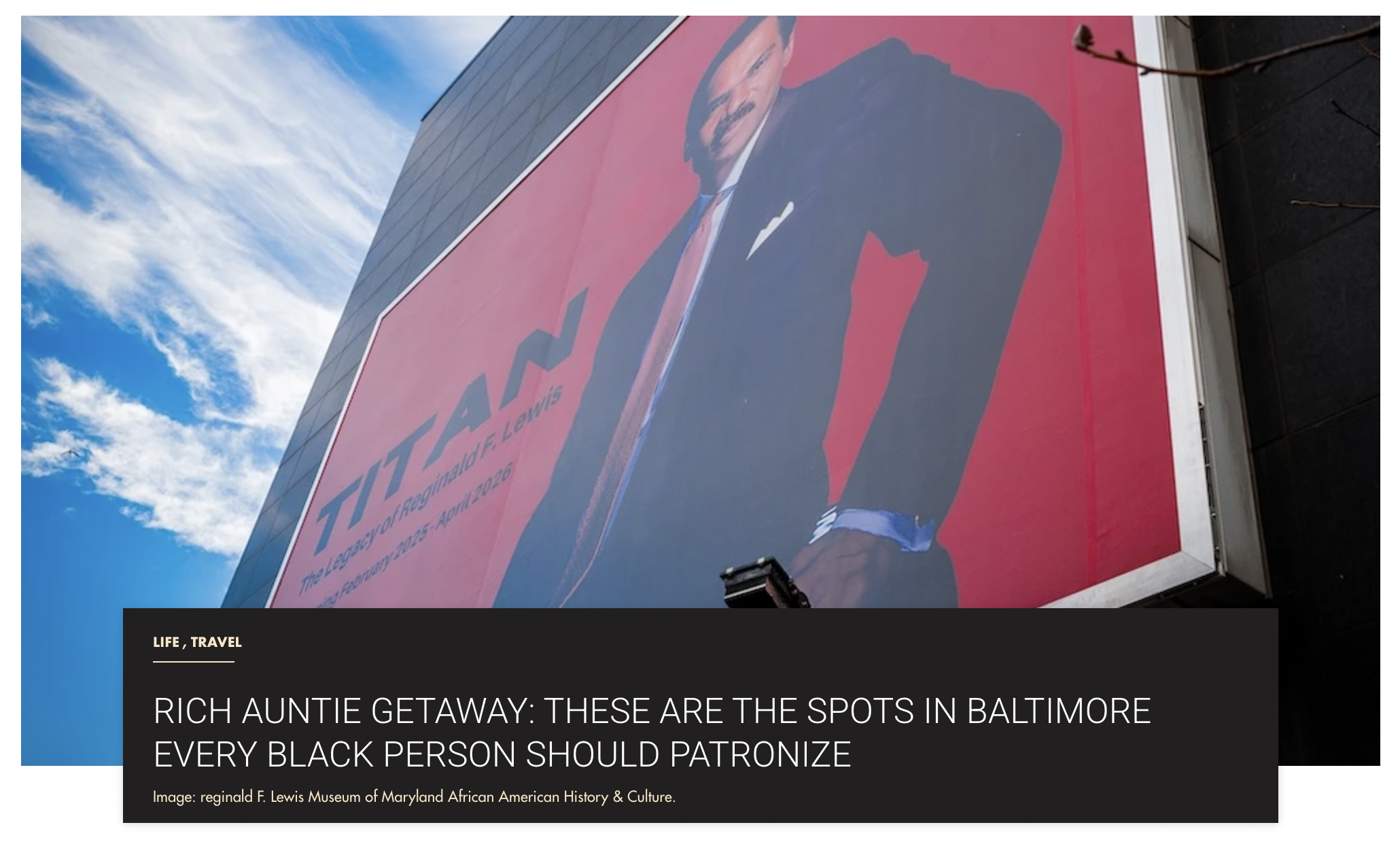
Travel writer Delaina Dixon highlights a collection of must‑visit establishments in her Ebony feature, Rich Auntie Getaway: These Are the Spots in Baltimore Every Black Person Should Patronize.

For those seeking a cosmopolitan weekend retreat that’s rooted in Black community and creativity, Baltimore’s cultural landscape shines.
The city offers an array of Black-owned venues—from upscale lounges to history-rich museums that reflect a vibrant, “rich auntie” energy that is refined, unapologetic, and cultivated with purpose.
Travel writer Delaina Dixon highlights a collection of must‑visit establishments in her Ebony feature, Rich Auntie Getaway: These Are the Spots in Baltimore Every Black Person Should Patronize.
Ranging from boutique cafés to historic cultural institutions, the destinations embody intentional living, creative leisure, and sisterhood. They are a clear statement that one can recharge without leaving Charm City’s borders.
At Mama Koko’s, tucked inside the storied Hooper House, guests sip espresso‐based cocktails amid second‑floor artisan shops. Owner Angola Selassi named the spot after his mother, who was also known for embracing community through reading circles, and the café’s atmosphere resonates with healing, literary exploration, and soulful connection.
Rooted Rotisserie, born from pandemic‑era soup‑makeovers, blends French culinary techniques with heritage flavors in Hollins Market. Chef-owner Joseph Burton crafts dishes infused with familial history, set against décor that evokes the feeling of dining in a family photo album.
Up in the arts‑rich Bromo Arts District lies The Garden Rooftop, a lounge where lush greenery and craft cocktails set the scene. A second‑floor lounge offers live DJs, cigars, and hookah. It is an intimate, elevated atmosphere suited for late‑night gatherings.
Essentials for cultural immersion include the Reginald F. Lewis Museum of Maryland African American History & Culture, a landmark that charts Black success and struggle. Its Titan exhibit invites visitors to “sit” in the same space where Lewis brokered billion‑dollar deals, alongside evocative installations like “The Lynching in Maryland,” memorializing 38 victims of state‑sanctioned racial terror.
For those drawn to maritime flair, The Urban Oyster, a pioneering Black woman‑owned oyster bar, offers both raw and inventive seafood dishes ranging from char‑grilled bacon‑BBQ oysters to collard green–topped Rockefeller variations. Its accessible pricing and culinary storytelling aim to reconnect Baltimoreans to the region’s oyster legacy.
These establishments join a broader trend in Baltimore: the rise of Black-owned hospitality and community spaces, such as Mobtown Ballroom & Café, a Station North hotspot known for its swing-dance sessions, belly-dance classes, and a cozy café. Or MahoganyBooks, a Washington‑based independent bookstore with deep roots in Black literature and diaspora stories.
Their collective appeal lies in what sociology calls the “rich auntie” aesthetic: a celebration of financial autonomy, cultural refinement, artistic expression, and community care.
These spaces offer more than shopping, as each fosters intentional moments of self-care, connection, enrichment, and legacy.
In Baltimore, a city where 63% of residents identify as Black, this wave of localized culture affirms identity and invites Black residents and visitors to experience a weekend retreat that nourishes soul, creativity, and joy.